
Establishing a virtual nutrition business can provide you with the flexibility of working from home while supporting clients across the world. Our experts have created a step-by-step guide to help you through the process.
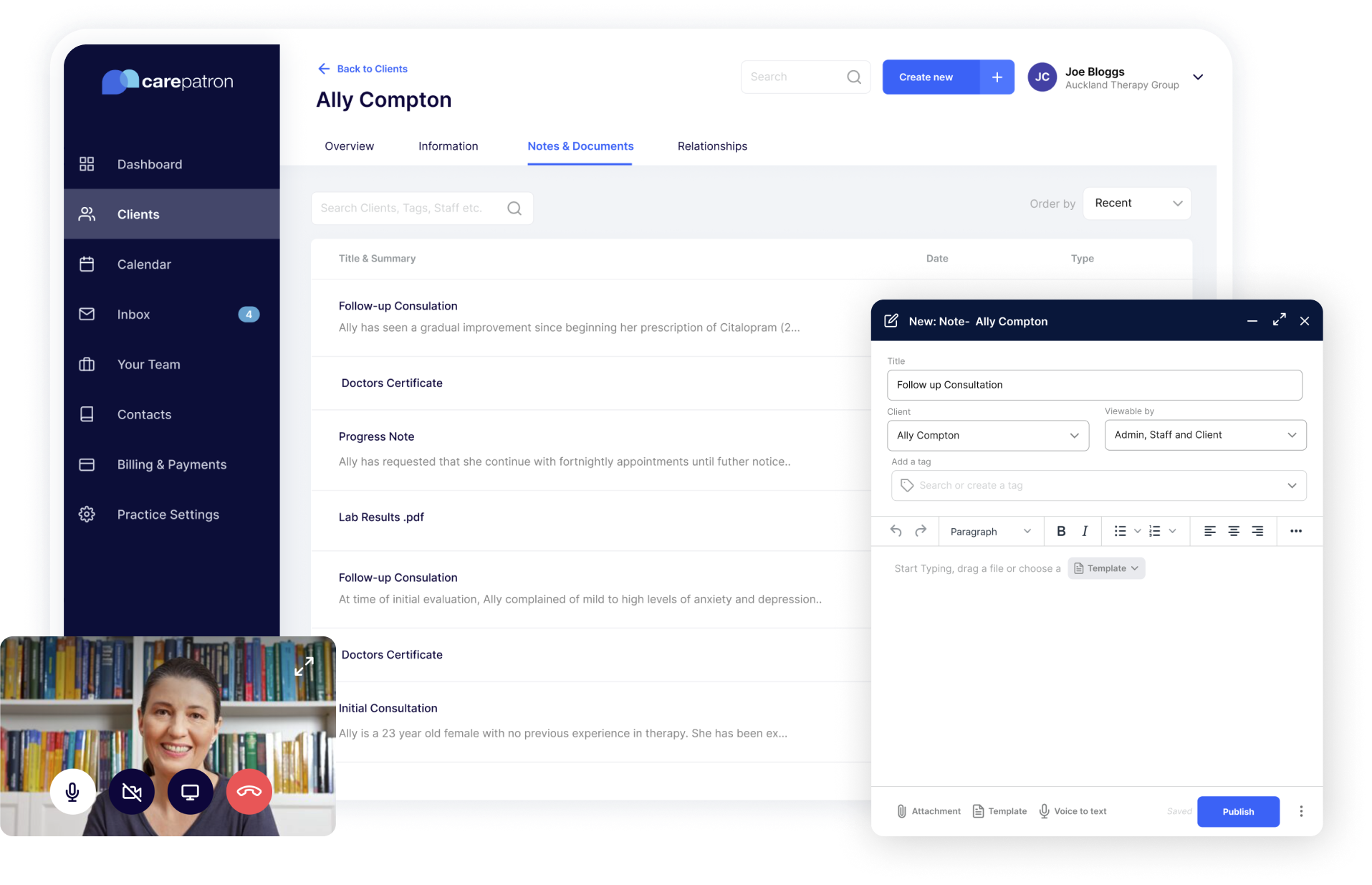

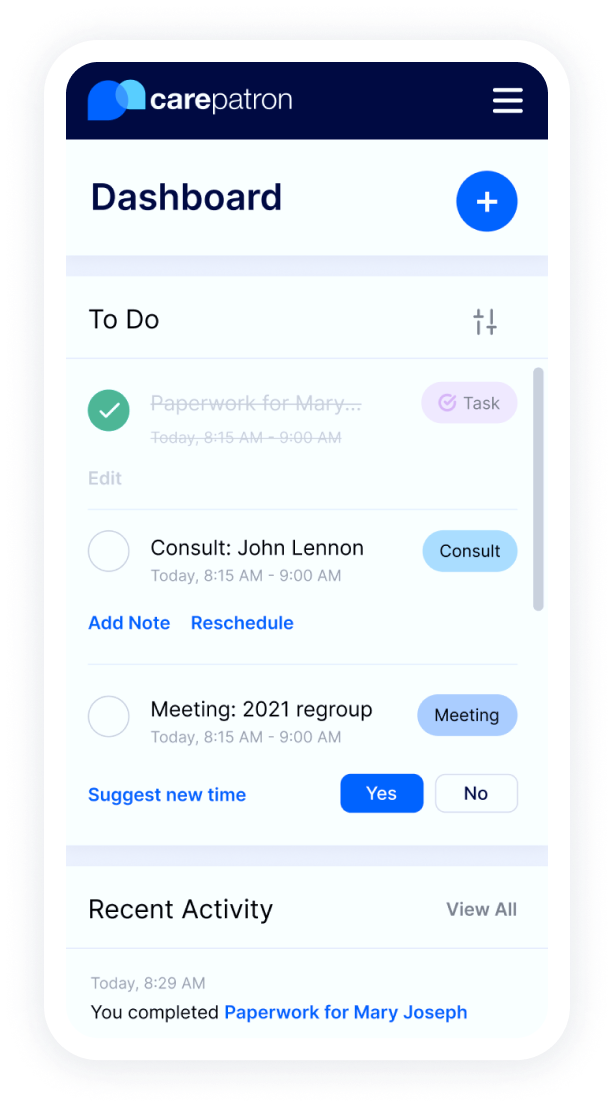
Take control of your schedule and calendar from your desktop or mobile app. Use automated appointment reminders and our fully integrated video calling tool to maximize your productivity.

Store all your patient information, clinical notes, and documentation safely in your secure clinic system. We autosave, so you'll never lose work again.

Carepatron online or mobile payments make it easier for your clients to pay for your bills. You save a massive amount of time while getting paid twice as fast. What a great way to improve your day and cashflow!

As technology continues to improve, more and more nutrition and dietician practices are choosing to introduce virtual services. Whilst this is an exciting venture that offers many different opportunities, there are certain tips and strategies you should be aware of in order to be successful. In this guide, we are going to break down ways that you can enhance your practice management, attract and retain clients and improve your overall marketing. Each of these areas of healthcare will lead to increased revenue, by building your clientele and saving you significant amounts of resources and time.
To begin, let’s look at some of the ways that you can enhance your virtual practice management. If your practice is not quite at this level yet, or you are just beginning to think about opening your business, take a look at our tips to start your own nutritionist practice.
Setting up scheduling software is one of the first steps you need to take with a virtual nutrition business. Online appointment scheduling allows patients to access your calendar and book a time slot that suits them. This can be achieved by sharing your Google Calendar, or using a practice management system that is integrated with appointment scheduling, like Carepatron. Your appointment system should be accessed by and synced with every staff member’s personal schedule, to create a unified workflow that is updated in real-time.
If you choose to deliver your services virtually, you need to have a good video conference platform. It is important that even though you are not meeting face-to-face with your clients, you are still presenting yourself and your business professionally. There are several different video conferencing platforms that are suitable for healthcare, but before you make your decision you need to ensure it is HIPAA-compliant and reliable.
As well as delivering your services and appointments virtually, you will also need to have an online payment platform. These systems need to be reliable to ensure that you are getting paid, but also have high-security features to protect you and your clients. Fortunately, many HIPAA-compliant billing platforms have been developed, and you may choose to use one that is independent or a system that integrates with your practice management software.
Just like with an in-person healthcare business, operating a virtual nutritionist practice requires patient feedback in order to be successful. After your appointments with clients, you should ask them to leave a review. Not only do these help you identify areas that require improvement, but they also encourage prospective clients to walk through your doors.
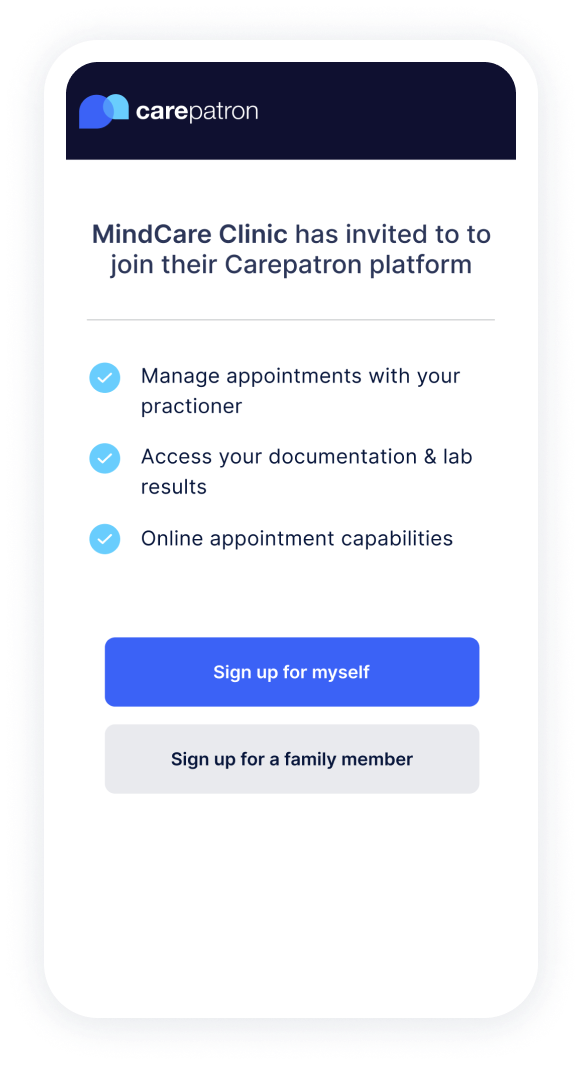
You might be wondering whether it is difficult to grow your clientele from a virtual base. After all, without the face-to-face quality of an in-person interaction, it can be slightly harder to build rapport. Nevertheless, there is a range of different client retention strategies for your business to ensure this isn’t the case.
Unsurprisingly, the first step to attracting new clients is to develop a plan. Your strategy should be based on customization - what is it that makes your practice better than others? Additionally, use the fact that you operate virtually to your advantage. Many clients are looking for innovation and creativity, and you can demonstrate your commitment to this through the use of new technology and advances in the nutrition field within your business.
When potential clients are thinking about you and your business, you want to ensure that they have your brand in mind. Branding your practice takes a bit of time, and you want to prioritize personal branding over professional branding. This means focusing on the personality aspects of your practice, rather than its business operations. People look at hundreds of branding images, logos and advertisements every day, so you really want to accentuate the things that differentiate you from your competitors.
The healthcare industry is competitive, and starting your own nutrition practice will always have its risks. In order to combat some of these, you need to find your own niche and market this. Knowing the ins and outs of the industry will help you spot a gap in the market and direct your dietician practice KPIs towards this, driving the short- and long-term goals of your business.
Successful branding is heavily reliant on your connections with others. It is important to network with other established nutrition businesses, so you can share knowledge and build your reputability. Networking also relates to your online presence, and you should be utilizing social media and your website to publish relevant content regularly.
Building an online presence for your dietician practice can be difficult, particularly for businesses that have had limited previous experience. To help you manage this part of marketing, we’ve compiled a useful list of strategies.
Step one requires you to build a website that is easy to use. The chances are that every potential client will look at your website to determine whether you are a good fit, so it’s important that the site is easy to navigate and contains the right information. You may also choose to integrate a blog into your website from which you publish regular content, leading to improved engagement from your clients.
You want to ensure that your business can be found easily on Google. This means your website needs to include information like location, services, contact numbers as well as photos, and news updates. Improving your SEO (search engine optimization) will bump your website to the top, leading to higher engagement and a broader clientele.
Failing to use social media is one of the most common nutrition practice mistakes to avoid. These platforms are a great way to market your business and you should look into having an account on Facebook, Instagram, Twitter, and LinkedIn, and using these pages to regularly publish relevant and interesting content.
As we mentioned, including a blog within your website can be a good idea. Blogs allow you to publish quality and relevant content, attracting the interest of patients and improving the branding process of your business.
Google Business listings are free business profiles that provide details regarding your location, services, and products. In addition to generating further engagement, these listings increase your visibility across Google platforms.
Newsletters and email campaigns are traditional forms of marketing that have continuously proven to be effective. They allow you to personalize communication, update your clients about recent changes or current promotional strategies and ensure you remain in mind!


Operating an online nutrition practice is a fairly new form of delivering healthcare services that require different marketing and management forms. Nevertheless, equipped with the right knowledge, you will be well on your way to boosting the organization and efficiency of your business and expanding your clientele. The most important aspect of generating revenue is attracting and retaining clients: with the tips and strategies we have just given you, you should be able to improve your practice’s brand and online presence, and greatly broaden your clientele!
Further Reading:


