
KPI's help nutrition businesses thrive by providing a framework for actionable and measurable objectives. When a team is aligned on its goals, it can focus on achieving the best client outcomes.
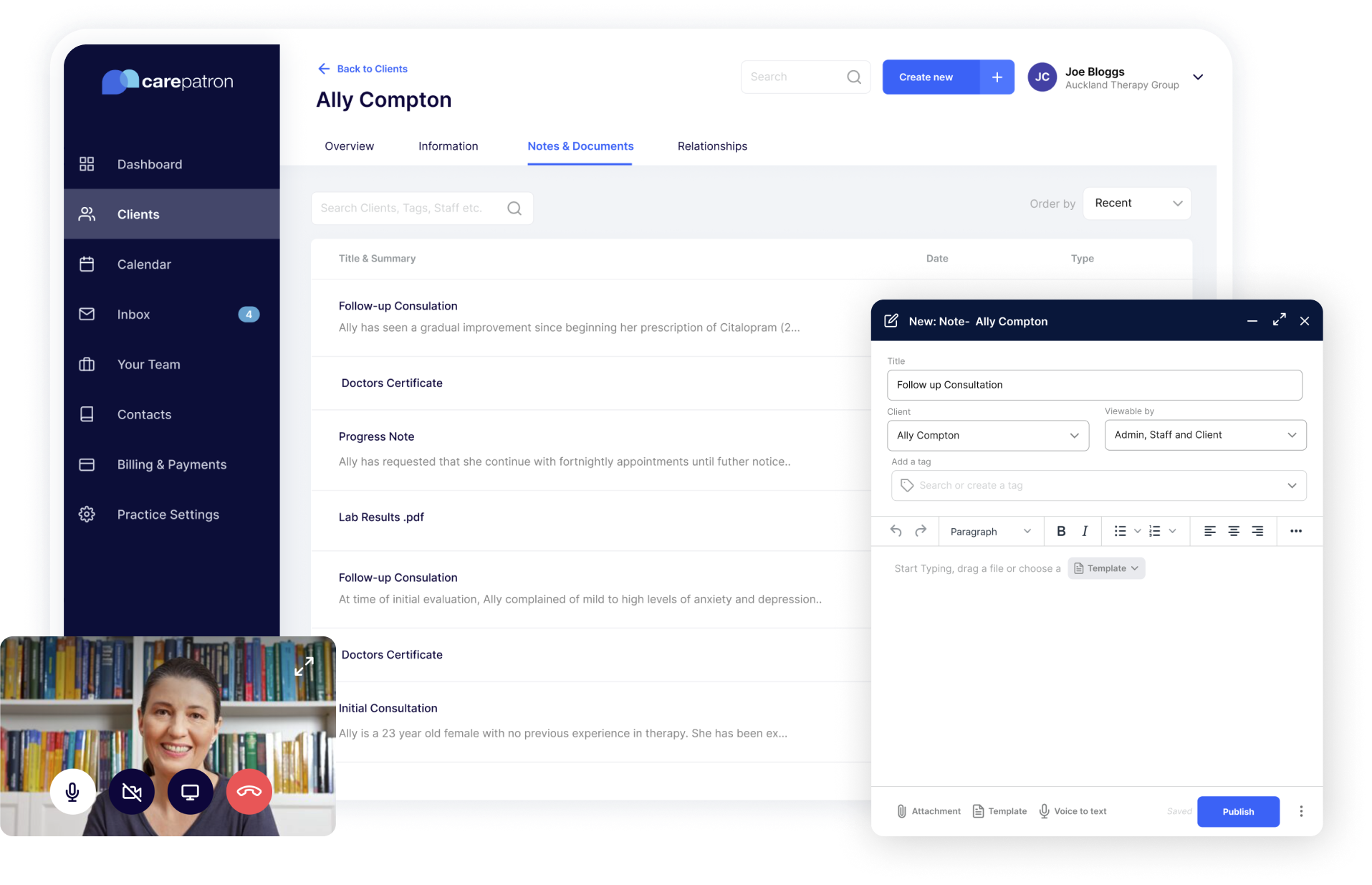

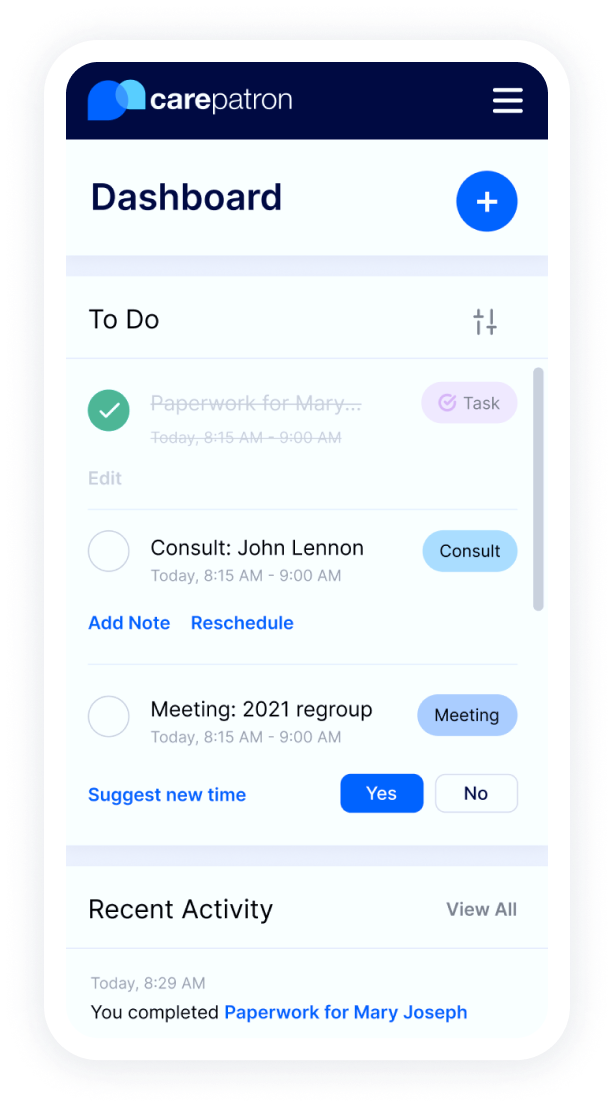
Take control of your schedule and calendar from your desktop or mobile app. Use automated appointment reminders and our fully integrated video calling tool to maximize your productivity.

Store all your patient information, clinical notes, and documentation safely in your secure clinic system. We autosave, so you'll never lose work again.

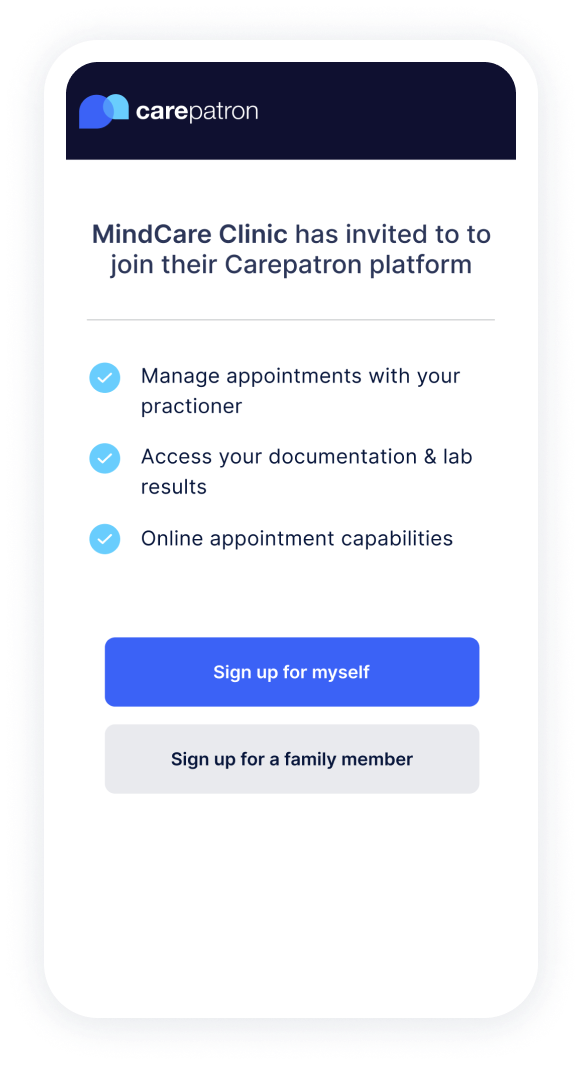
Carepatron online or mobile payments make it easier for your clients to pay for your bills. You save a massive amount of time while getting paid twice as fast. What a great way to improve your day and cashflow!

Key Performance Indicators (KPIs) are metrics that businesses use to assess whether or not they are achieving their goals and objectives. When a nutrition business identifies what it would like to achieve, it can create KPIs that guide employees to success. These KPIs need to be quantifiable and specifically relevant to each objective, so that performance can be accurately measured. For example, if your dietitian practice is interested in improving patient satisfaction, the correlating KPI could be receiving high scores (you will need to set your own benchmark) from over 90% of your clients on a feedback survey. Keep in mind that whilst KPIs help to guide your business to success, it is important to have a limit on these so they are actually achievable.
Whilst the specific way that your business will incorporate KPIs into your nutritionist management guide will differ, we’ve identified the three most important tips to guide this process.
You first need to determine the specific objectives of your business that you are wanting to target. Realistically, you will have developed a large list of goals when you were starting your own nutritionist practice, but you need to refine these so they can actually be achieved. Think of the objectives that will help increase revenue - these are often the most important.
In order to measure your achievement, you need to decide what success looks like. After you have determined your strategic objectives, it is necessary to develop specific success parameters. These will look different depending on your objectives, but you should set a threshold that can be quantifiably measured.
The acronym SMART is a useful strategy to define the creation of your KPIs. It refers to goals that are specific, measurable, achievable, relevant, and time-bound. If your KPI doesn’t fit within these criteria, you should consider making adjustments so that you are more likely to succeed.

Taking the next step in achieving goals at your business by creating KPIs is a very important precursor to success. Some of the main reasons why KPIs are essential to include:
As a business owner, it is essential that you are constantly aware of the “health” of your business, and the best way to do this is by creating KPIs. They allow you to actually measure and visualize how well your company is doing and identify areas requiring improvement.
Measuring progress is an essential aspect of success that can occasionally be difficult to properly manage. With KPIs, you will be able to identify revenue, gross margin and your number of employees and clients, allowing you to quantifiably track progress and adjust long-term goals accordingly.
Staying on top of the changes in your business over time can be difficult without the right systems in place. KPIs not only allow you to identify achievement, but can also indicate how you have progressed over time, and observe relevant patterns that are impacting business processes.
A good nutrition business is always thinking about how it can improve in the future. From building an online presence, to growing your clientele and improving revenue, these goals should always be future-oriented. Your KPIs should reveal trends and patterns that allow you to predict future results and focus on achieving long-term goals.
In addition to identifying improvements, KPIs will also reveal any issues that your business is experiencing and consequently resolve them. For example, say your business is struggling to get returning clients. You can create KPIs that are specifically directed at this (e.g. using a loyalty scheme with discounts to encourage clients to return, measured by a percentage increase in clients who have 3+ sessions at your practice).
It can be hard to wrap your head around new concepts without seeing concrete examples of how these work, so we’ve compiled a list of different KPIs that may be applicable to your practice. However, adopting KPIs that you haven’t developed yourself is a common nutrition practice mistake to avoid, as it doesn’t allow for flexibility or direct focus on your specific business needs.
Understanding monthly leads is a great way to grasp how successful your current marketing strategies are. You could keep a record of how many people enquire about your services, including those who sign up to email campaigns, check your website or engage with your social media pages. Typically, higher numbers of leads correlate with increases in clients, so focusing on improving these numbers is a good KPI.
Whilst leads are important, they aren’t always going to generate revenue. To determine how high the transition rate is from a lead to a client, you should keep track of this conversion. This will allow you to determine how engaging your website/social media is, and whether or not you need to adjust your marketing strategies.
Knowing how much money is coming in versus how much money is going out is an absolutely essential KPI. This data will show if you are generating revenue for your dietitian practice, and whether your current expenditure is sustainable. The best way to track finances is through software that runs the numbers for you and generates easily analyzable overviews. The analysis you conduct monthly will help you create your next financial-related KPI.
This can be an ambiguous cost, but it is still very important to know how much you are spending to acquire new leads. New leads can end up contributing to increased revenue, but you will only be able to guarantee this if you know how much you are spending.
Knowing how long your treatment sessions are is a good KPI to track for a couple of reasons. Firstly, it allows you to more effectively plan your scheduling to ensure the right number of clients are being seen, and your workflow is productive. Secondly, this number will determine how many sessions you need per day or week in order to reach financial targets, helping to both stabilize and improve revenue.

Generating consistent KPIs is one of the best strategies for a dietitian practice. Not only does it allow you to visualize short-term goals, but it helps you plan for the future and facilitate a pathway to success. As a business owner, you might be tired of constantly having to create objectives and goals, but as I’m sure you now realize, they are the biggest precursor to a long and successful career. KPIs will differ depending on the size of your practice and your specific goals, but it might be a good idea to reach out to your network of other dietitian businesses and see what has worked for them. We hope that this guide has demonstrated the reasons why KPIs are so important, and you should now be prepared and ready to construct your own effective targets.
Further Reading:


