
Pulse Rate During Pregnancy
Optimize maternal health with our Pulse Rate During Pregnancy Chart. Track daily pulse rates seamlessly, ensuring a healthy pregnancy journey.


What is a Pulse Rate During Pregnancy Chart?
The pulse rate, or heart rate, is the number of heartbeats per minute and is an essential indicator of cardiovascular health. A woman's body undergoes significant changes during pregnancy to support the developing fetus. These changes can affect various physiological systems, including the cardiovascular system.
A pulse rate during pregnancy chart would likely provide a range of normal heart rates for pregnant women during different stages of pregnancy. Normal resting heart rates can vary, but a typical adult resting heart rate ranges from 60 to 100 beats per minute. During pregnancy, it is not uncommon for the heart rate to increase slightly due to the increased blood volume and the demand for nutrients and oxygen for the growing baby.
It's crucial to note that individual variations exist, and what might be considered normal for one person may differ for another. Age, fitness level, and overall health can influence heart rate. Additionally, some women may experience conditions during pregnancy that could affect their heart rate, and any concerns about heart rate should be discussed with a healthcare provider.
Pregnant women should receive regular prenatal check-ups where healthcare professionals monitor vital signs, including heart rate, to ensure the well-being of both the mother and the developing baby.
Pregnant women need to communicate openly with their healthcare providers and seek guidance on any concerns or questions related to their health during pregnancy. Always consult a qualified healthcare professional for personalized advice and information regarding individual health circumstances.
Printable Pulse Rate During Pregnancy Chart
Download this Pulse Rate During Pregnancy Chart to document your patient’s pulse rate.
How Does it Work?
Using a printable Pulse Rate During Pregnancy Chart involves a straightforward process to monitor and track a pregnant woman's heart rate throughout different stages of pregnancy. Here are the steps involved:
1. Access the Chart
Find a reliable source or healthcare provider that offers a printable Pulse Rate During Pregnancy Chart. These charts may be available online or provided by healthcare professionals.
2. Download or Obtain the Chart
Download the printable chart from the selected source. If provided by a healthcare professional, they may give you a physical copy during a prenatal appointment.
3. Understand the Chart
Familiarize yourself with the different sections of the chart, including the range of normal pulse rates during pregnancy. Typically, these charts are designed to accommodate various stages of pregnancy.
4. Enter Personal Information
Input your personal information at the top of the chart. This may include your name, date of birth, and any relevant medical information.
5. Record Dates and Pulse Rates
Use the chart to record specific dates and corresponding pulse rates. Regularly measure your resting heart rate and document it on the chart. This can be done daily or as recommended by your healthcare provider.
6. Note Changes or Concerns
Pay attention to any significant changes or deviations from the normal range. If you notice unusual spikes or consistently high or low readings, consult your healthcare provider promptly.
7. Bring to Prenatal Appointments
Take the completed chart with you to prenatal check-ups. This information can be valuable for healthcare professionals to assess your cardiovascular health and overall well-being during pregnancy.
8. Follow Healthcare Provider's Guidance
Always follow the guidance and recommendations of your healthcare provider. They may provide specific instructions on monitoring your pulse rate and interpreting the chart data.
Pulse Rate During Pregnancy Chart Example (Sample)
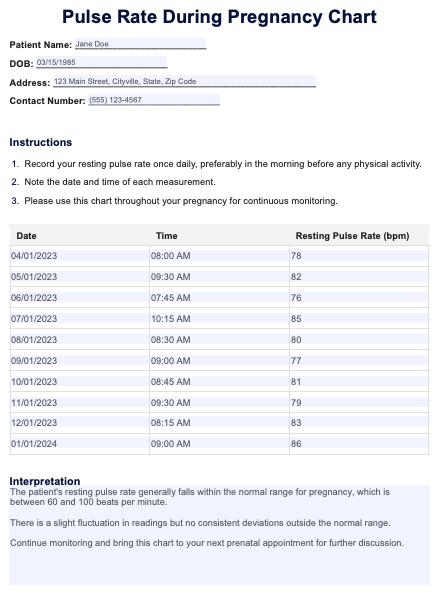
This Pulse Rate During Pregnancy Chart is a comprehensive and user-friendly tool designed to aid expecting mothers and healthcare professionals in monitoring cardiovascular health throughout pregnancy.
The chart lets users record their resting pulse daily, providing a detailed measurement log. The included date, time, and pulse rate columns facilitate easy tracking.
At the same time, the interpretation section guides users in understanding the normal range for pregnancy, ensuring optimal maternal and fetal well-being. This customizable PDF chart is invaluable for individual tracking and collaborative discussions during prenatal appointments.
It empowers pregnant individuals to actively participate in their health management actively, promoting a proactive approach to cardiovascular care during this crucial period.
Feel free to download the Pulse Rate During Pregnancy Chart PDF to seamlessly integrate it into your routine, fostering a more informed and connected pregnancy journey. Monitoring pulse rates has never been more accessible, thanks to this user-friendly tool that enhances communication between expectant mothers and healthcare providers.
Download this Pulse Rate During Pregnancy Chart Example:
When Would You Use This Chart?
The Pulse Rate During Pregnancy Chart is a valuable tool for pregnant women and healthcare practitioners to monitor and assess cardiovascular health during the various stages of pregnancy. Here are situations when the utilization of this chart is particularly relevant:
- Routine Monitoring: Pregnant individuals can use the chart to self-monitor their pulse rates. Regular tracking allows them to observe patterns and identify unusual fluctuations warranting attention.
- Prenatal Care Appointments: Healthcare practitioners, including obstetricians, midwives, and nurses, can incorporate the Pulse Rate During Pregnancy Chart during prenatal care appointments. This allows them to track changes in the patient's heart rate over time, providing additional insights into cardiovascular health.
- Identification of Abnormalities: The chart becomes especially useful in identifying abnormalities or deviations from the expected range. If a pregnant woman consistently experiences a high or low pulse rate outside the normal parameters, healthcare providers can investigate potential underlying issues.
- High-Risk Pregnancies: For pregnancies classified as high-risk, monitoring the pulse rate becomes even more crucial. Conditions such as preeclampsia or gestational diabetes may impact cardiovascular health, and the chart helps in early detection and management.
- Pre-existing Cardiovascular Conditions: Pregnant individuals with pre-existing cardiovascular conditions, such as hypertension or arrhythmias, can use the chart to track changes and ensure that their heart rate remains within safe limits during pregnancy.
- Customized Care Plans: Healthcare providers can use the information gathered from the chart to tailor personalized care plans. This customization is significant as each pregnancy is unique, and individualized monitoring enhances the quality of prenatal care.
- Communication and Education: The chart facilitates communication between pregnant individuals and healthcare providers. It can serve as a visual aid to educate patients about the significance of pulse rate in pregnancy and empower them to participate in their healthcare actively.
What do the Results Mean?
Interpreting the results of a Free Pulse Rate During Pregnancy Chart involves understanding the normal range of pulse rates for pregnant individuals and recognizing potential implications of readings outside this range. Here's a breakdown of common results and their meanings:
- Normal Range: A normal pulse rate during pregnancy typically falls within 60 to 100 beats per minute. Resting heart rates can vary among individuals, but most pregnant women will experience a modest increase due to the physiological changes associated with pregnancy.
- Mild Elevation: A slight elevation in pulse rate may be considered normal during pregnancy, especially in the second and third trimesters. This is often attributed to the increased blood volume and the demands of supplying oxygen and nutrients to the growing fetus. A pulse rate slightly above the baseline may not be a cause for concern.
- Significant Elevation: If the pulse rate consistently exceeds the upper limit of the normal range, it could indicate conditions such as dehydration, anemia, or an overactive thyroid. Additionally, persistent high pulse rates may be associated with cardiovascular issues, and consultation with a healthcare provider is advisable.
- Low Pulse Rate: A lower-than-normal pulse rate may be a concern, as it could suggest bradycardia, where the heart beats too slowly. Causes may include certain medications, an underlying heart condition, or, rarely, issues with the heart's electrical system. Consultation with a healthcare provider is crucial to determine the cause and appropriate management.
- Fluctuations: Occasional fluctuations within the normal range may be expected. Physical activity, stress, or caffeine intake can influence pulse rate. However, persistent or extreme fluctuations may warrant further investigation.
- Individual Variations: It's essential to consider unique variations. Some pregnant women may naturally have a lower or higher baseline pulse rate. Comparing results to the woman's baseline and noting any sudden or significant changes is vital for accurate interpretation.
Research & Evidence
Monitoring pulse rate during pregnancy is integral to understanding the cardiovascular shifts expectant mothers undergo (Sanghavi & Rutherford, 2014). As blood volume escalates and the heart intensifies efforts to supply oxygen and nutrients to the mother and fetus, physiological adaptations materialize as discernible changes in the pulse rate (Bossung et al., 2023).
Extensive research within obstetrics and gynecology consistently emphasizes the vital role of regular prenatal check-ups and the continuous monitoring of vital signs, ensuring the optimal well-being of both the mother and the baby (Harris, 2020).
Guidelines from respected entities such as the American College of Obstetricians and Gynecologists (ACOG) and the World Health Organization (WHO) underscore the imperative nature of routine assessments, including pulse rate measurement, as integral components of comprehensive prenatal care (American Pregnancy Association, 2023).
While specific charts are utilized in clinical settings, their development and application are typically grounded in established principles of maternal-fetal health, reflecting the broader body of research in the field (Fields, 2018).
Pregnant women are encouraged to heed the guidance of their healthcare providers, who adeptly employ various tools, including pulse rate monitoring, to holistically assess and manage maternal health throughout the pregnancy (Savani, 2023).
Commonly asked questions

Pregnant individuals and healthcare professionals, including obstetricians, midwives, and nurses, typically request Pulse Rate During Pregnancy Charts.
Pulse Rate During Pregnancy Charts are used during routine prenatal care appointments, especially in high-risk pregnancies or when monitoring specific health conditions. Pregnant individuals may also use them for personal tracking.
Users download the chart, input personal information, and record dates along with corresponding pulse rates regularly. Healthcare professionals incorporate the chart into prenatal care appointments, analyzing trends and deviations for optimal maternal and fetal health management.
Completing a Pulse Rate During Pregnancy Chart is a quick process. Users can input data efficiently, and recording pulse rates typically takes just a few minutes each time. The duration of use extends throughout the pregnancy, providing a comprehensive overview of cardiovascular health.
Why Use Carepatron as Your Pulse Rate During Pregnancy App?
Elevate your pregnancy journey with Carepatron, the ultimate destination for managing your pulse rate during pregnancy. Our state-of-the-art Pulse Rate During Pregnancy Chart app redefines the way you monitor and care for your cardiovascular health, putting you in control with a seamless and empowering experience.
Why choose Carepatron? Our innovative software combines simplicity and sophistication, offering an intuitive interface that makes tracking your pulse rate a breeze.
Say goodbye to the hassle of traditional charts and hello to a user-friendly app that effortlessly adapts to your lifestyle. Easily download, input your data, and visualize trends at your fingertips, all while enjoying the convenience of digital monitoring.
We prioritize your privacy and security. Your health data is sacred, especially during this precious time, and our app employs top-notch security measures to protect your information. Feel confident in sharing your comprehensive charts with healthcare professionals, fostering a collaborative approach to your personalized maternal care.
Make the smart choice for your pregnancy journey. Choose Carepatron, where technology meets compassion. Our Pulse Rate During Pregnancy Chart app isn't just an app; it's your dedicated partner in ensuring a healthy and informed pregnancy.
Join our community and experience a new era of prenatal care tailored just for you.

References
American Pregnancy Association. (2023, September 20). Early fetal development. https://americanpregnancy.org/healthy-pregnancy/pregnancy-health-wellness/early-fetal-development/
Bossung, V., Singer, A., Ratz, T., Rothenbühler, M., Leeners, B., & Kimmich, N. (2023). Changes in Heart Rate, Heart Rate Variability, Breathing Rate, and Skin Temperature throughout Pregnancy and the Impact of Emotions—A Longitudinal Evaluation Using a Sensor Bracelet. Sensors, 23(14), 6620. https://doi.org/10.3390/s23146620
Fields, L. (2018, January 1). Fetal heart rate monitoring and your baby’s health. WebMD. https://www.webmd.com/baby/pregnancy-fetal-heart-monitoring
Harris, M. (2020, March 18). Vital Signs in Pregnancy: Defining Normal Ranges - The ObG Project. The ObG Project. https://www.obgproject.com/2020/03/17/vital-signs-in-pregnancy-defining-normal-ranges/
Sanghavi, M., & Rutherford, J. D. (2014). Cardiovascular physiology of pregnancy. Circulation, 130(12), 1003–1008. https://doi.org/10.1161/circulationaha.114.009029
Savani, M. (2023, July 5). Normal Pulse Rate For Pregnant Women | Bodywise. Bodywise. https://bebodywise.com/blog/normal-pulse-rate-during-pregnancy/

Related Templates
