
Cognitive Therapy Rating Scale (CTRS)
Learn how to use the Cognitive Therapy Rating Scale (CTRS) to evaluate the effectiveness of cognitive therapy interventions. Download our PDF template now.


What is a Cognitive Therapy Rating Scale?
A Cognitive Therapy Rating Scale (CTRS) is a standardized tool used to evaluate the quality and effectiveness of cognitive therapy sessions. Cognitive therapy, also known as cognitive-behavioral therapy (CBT), aims to help individuals recognize and change negative thought patterns and behaviors contributing to emotional distress or psychological difficulties.
Mental health professionals, like therapists and psychologists, typically use the CTRS to assess different aspects of the therapy session. This includes how well the therapist follows CBT principles, their skill in applying cognitive and behavioral techniques, their ability to build a therapeutic relationship with the client, and the overall quality of the session. The scale may also include specific criteria or items that another trained therapist or researcher observes and rates based on their observations during a therapy session.
Printable Cognitive Therapy Rating Scale (CTRS)
Download this Cognitive Therapy Rating Scale (CTRS) to evaluate how effective treatment is.
How does it work?
Our printable Cognitive Therapy Rating Scale can help you assess the effectiveness of cognitive therapy interventions. Here's how to make the best use of this template:
Step One: Access the scale
Obtain a copy of the CTRS template through the link provided on this page. You can also find it on the Carepatron app or our extensive resources library.
Step Two: Familiarize yourself with the scale
Before you start using the scale, take a good look at the instructions, criteria, and scoring guidelines. Ensure you understand the various aspects of cognitive therapy that the scale aims to assess.
Step Three: Select sessions for rating
Choose therapy sessions that you want to assess using the CTRS. These sessions could be recorded audio or video sessions. Ensure that you have the necessary consent from both the therapist and the client for recording and evaluation.
Step Four: Watch or listen to the session
Carefully observe or listen to the selected therapy session. Take notes on the therapist's interventions, techniques used, and the client's responses. Pay attention to how cognitive therapy principles are applied and how the session progresses.
Step Five: Rate the session
Use the rating scale to assign scores to various aspects of the therapy session. Different rating scales may have slightly different criteria, but generally, you will be assessing things like the therapist's adherence to cognitive therapy techniques, the depth of cognitive exploration, the therapist-client collaboration, and the overall progress of the client.
Step Six: Record your ratings
You can use our free template to document your rating for each aspect of the session. Be specific in your comments and notes, highlighting strengths and improvement areas.
Step Seven: Tally the score
Calculate total scores based on the individual ratings you assigned. This will give you an overall picture of how the therapy session went and provide a comparison between different therapeutic sessions.
Step Eight: Provide feedback
When evaluating a therapist's performance, use the ratings to provide constructive feedback. Highlight what the therapist did well and offer suggestions for areas where improvement is needed. If you're the therapist evaluating your own sessions, this step can be used for self-reflection and professional growth.
Cognitive Therapy Rating Scale Scoring and Interpretation
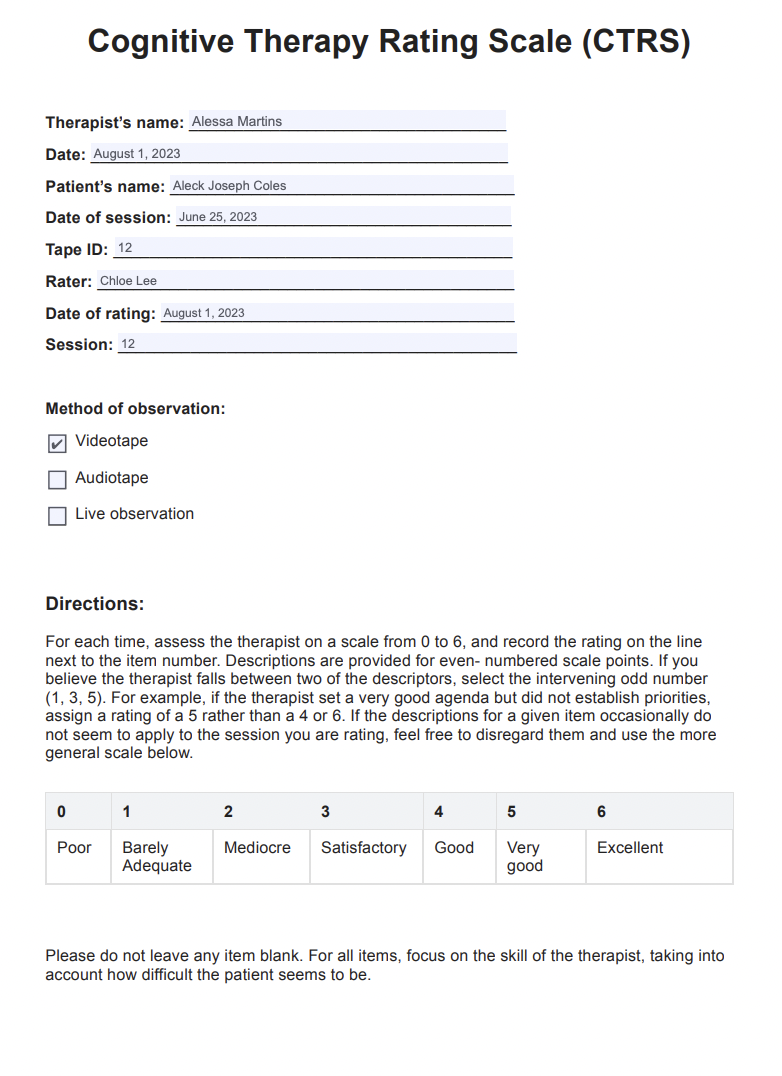
Each item on the CTRS is rated on a 7-point Likert scale, usually from 0 to 6, where higher scores indicate better performance. The scale may vary slightly depending on the specific version or adaptation of the CTRS.
The total score is calculated by summing the scores across all the items. The overall score can be interpreted in terms of the quality of the session and the therapist's adherence to cognitive therapy principles. Generally, higher scores indicate better adherence to the CBT techniques and principles, while lower scores may suggest areas for improvement.
Here's a general breakdown of how to interpret the total CTRS score:
- 0 to 40: Low adherence and poor quality of cognitive therapy.
- 41 to 70: Moderate adherence and quality; some room for improvement.
- 71 to 100: Good adherence and quality; therapist is skilled in cognitive therapy techniques.
- 101 and above: Excellent adherence and high-quality cognitive therapy.
The specific interpretation of the scores might vary based on the context and version of the CTRS being used. The scale is meant to be used as a tool for self-assessment by therapists, for clinical supervision, and for research purposes to evaluate the effectiveness of cognitive therapy interventions.
If you're using the CTRS in a specific setting, it's recommended to refer to the manual or guidelines provided with the scale for detailed scoring instructions and interpretation guidelines specific to that version of the scale.
Cognitive Therapy Rating Scale Example (sample)
Our team has created a completed Cognitive Therapy Rating Scale PDF to illustrate how our template works. Feel free to use this sample for reference or educational purposes. You can view it here or download it as a PDF.
Download the free Cognitive Therapy Rating Scale Example (sample):
When should you use this template?
You can use the Cognitive Therapy Rating Scale in various contexts. It is most commonly used for self-assessment by therapists, clinical supervision, and research studies evaluating the effectiveness of cognitive therapy interventions. Moreover, you can utilize the CTRS to:
Provide feedback to therapists about their cognitive therapy skills
This template is an excellent tool for giving feedback to therapists about their cognitive therapy abilities. It can be especially useful for in-training clinicians still developing their skillset.
Evaluate the quality of a cognitive therapy session
You can also use this scale to gauge the quality of a cognitive therapy session. This can be done by providing a score based on specific criteria, such as verbal interactions between the therapist and patient, use of techniques, and adherence to therapeutic goals.
Assess the effectiveness of a cognitive therapy intervention
Using the CTRS, you can better understand how well a therapist implements cognitive therapy techniques. This can provide insight into the effectiveness of cognitive therapy interventions and inform future practice.
Benefits of the free Cognitive Therapy Rating Scale template
Our free Cognitive Therapy Rating Scale template offers several advantages. Some of these include the following:
It's fully digital
Our free Cognitive Therapy Rating Scale template is digital, so you don't have to worry about printing out hard copies. This makes it easier to keep track of your ratings and ensure accuracy in the results.
It's simple and easy to use
The template is designed with simplicity in mind, allowing you to quickly assess a cognitive therapy session without wading through a lengthy questionnaire. All you have to do is fill in the necessary information and rate the session accordingly.
It's evidence-based
The Cognitive Therapy Rating Scale template is based on evidence-based research and guidelines. This ensures that you are providing reliable assessments and accurate ratings.
It aids in professional development
Using the Cognitive Therapy Rating Scale not only assesses the effectiveness of the therapy session but also serves as a tool for professional growth. By highlighting areas of strength and identifying areas for improvement, the scale provides therapists with actionable feedback to enhance their cognitive therapy skills.
Commonly asked questions

Mental health professionals, therapists, and healthcare providers use the Cognitive Therapy Rating Scale to assess the efficacy of cognitive therapy interventions. It proves particularly advantageous in measuring cognitive progress and determining the success of cognitive therapy techniques.
The Cognitive Therapy Rating Scale is utilized to evaluate and track the effectiveness of cognitive therapy interventions. It helps identify progress, uncover factors affecting cognitive well-being, and assess the outcomes of therapy techniques.
The Cognitive Therapy Rating Scale is a comprehensive tool for assessing cognitive therapy outcomes. It provides a thorough evaluation of cognitive progress, enabling practitioners to gauge the impact of therapy techniques and make informed decisions regarding treatment approaches.
Why choose Carepatron as your Cognitive Therapy Rating Scale platform?
Looking for a hassle-free and comprehensive solution to manage and level up your practice's effectiveness? Look no further than Carepatron!
Our cutting-edge Cognitive Therapy Rating Scale app is specifically designed with medical practitioners in mind, providing a seamless experience to optimize operations, elevate patient care, and boost overall efficiency.
With Carepatron, you can effortlessly schedule appointments, efficiently manage billing and payments, and securely store patient data. What's more, our platform offers the convenience of accessing your data from any device with an internet connection. Whether you're at the clinic, on the go, or working remotely, Carepatron Cognitive Therapy Rating Scale software has got you covered.
But that's not all! We understand the importance of continuous support for our valued customers. That's why we offer dedicated customer support to keep you in the loop on new features and updates, ensuring you always have the latest tools and enhancements at your fingertips.
Ready to embark on your Carepatron journey? Say goodbye to stress and hello to unparalleled convenience, enhanced security, and peace of mind for both you and your patients. Experience the future of practice management with Carepatron today!

References
Vallis, T. M., Shaw, B. F., & Dobson, K. S. (1986). The Cognitive Therapy Scale: Psychometric properties. Journal of Consulting and Clinical Psychology, 54(3), 381–385. https://doi.org/10.1037/0022-006X.54.3.381

Related Templates
