
Cardiopulmonary Exercise Testing
Understand the intricacies of Cardiopulmonary Exercise Testing (CPET), a comprehensive measure of heart and lung function during exercise.
What is a Cardiopulmonary Exercise Testing?
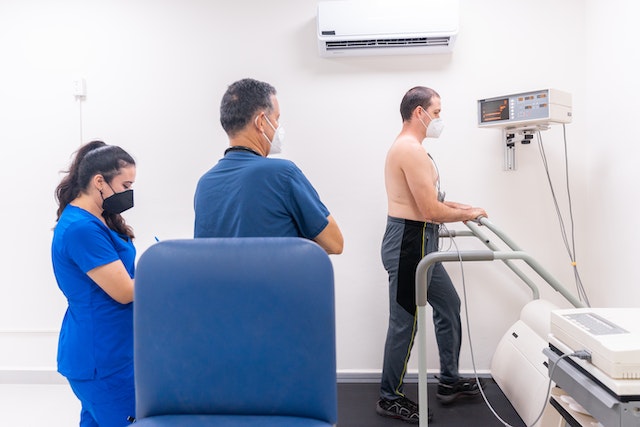
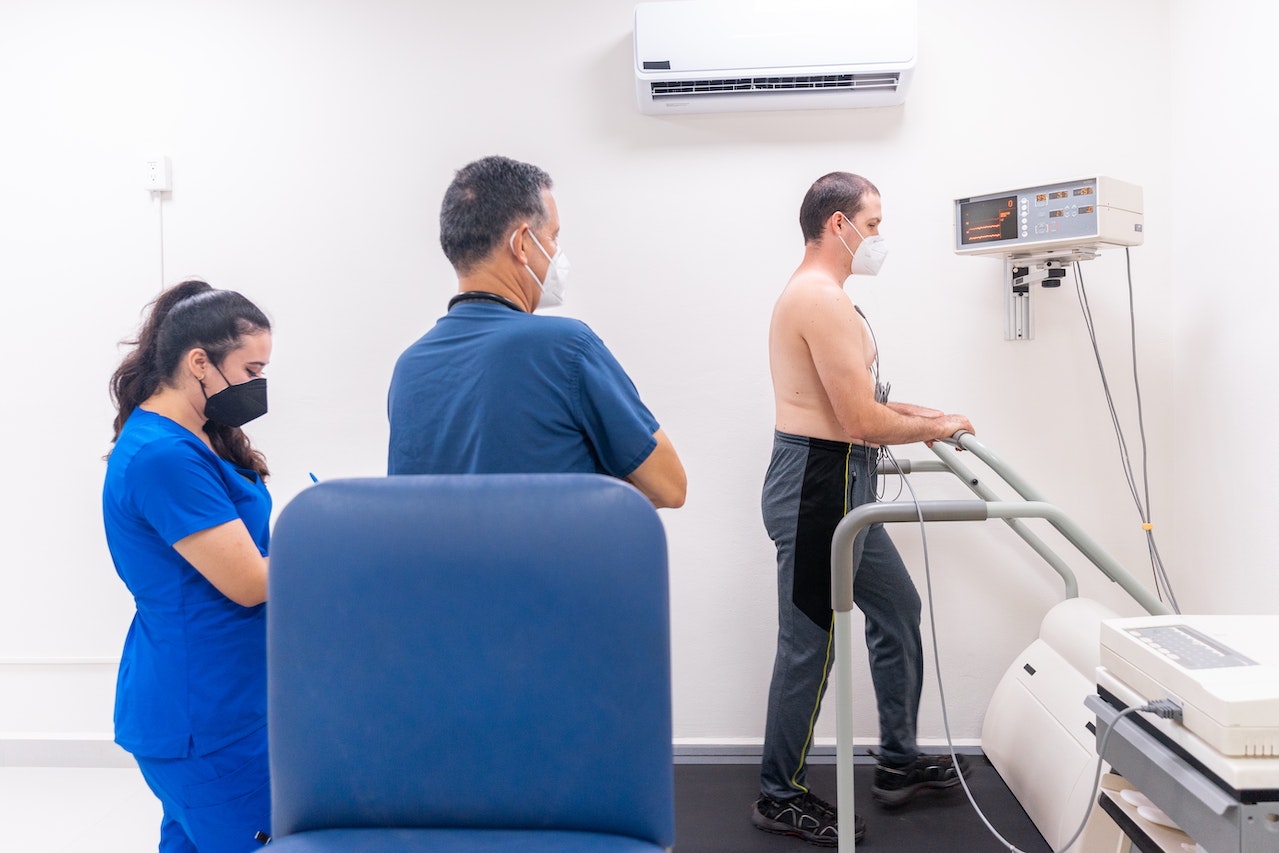
is an integrative and dynamic assessment method that evaluates how well your heart, lungs, and muscles work individually and in unison. CPET is performed while the patient engages in progressively increasing workloads on a stationary bike or treadmill.
As a comprehensive measure of exercise physiology, it offers a unique perspective into the body's working. It helps quantify the cardiovascular, pulmonary, hematopoietic, neuropsychological, and skeletal muscle responses to exercise.
Several parameters are recorded during the test, including heart rate, blood pressure, oxygen consumption (VO2), carbon dioxide output (VCO2), and respiratory rates.
These readings provide insight into the functioning of your cardiac and pulmonary systems. They assist in diagnosing various cardiac and pulmonary diseases, determining exercise tolerance, formulating rehabilitation plans, assessing perioperative risk, and devising personalized exercise training regimes.
Printable Cardiopulmonary Exercise Testing
Download this Cardiopulmonary Exercise Testing to measure heart and lung function during exercise.
How does this Cardiopulmonary Exercise Test (CPET) work?
The CPET process, while thorough, is well-structured and straightforward. It offers a unique lens into your body's functionality, especially focusing on your heart and lungs. The test progresses in clearly defined stages. Here's a step-by-step overview:
Step 1
The first step involves preparation. Patients are asked to come wearing comfortable clothes for exercising. They should avoid heavy meals, alcohol, vigorous exercise, and smoking for certain durations before the test.
Step 2
Resting measurements are taken. This includes a resting blood pressure measurement and an ECG to assess the heart rate and rhythm.
Step 3
A preliminary breathing test is performed. This allows the healthcare professional to evaluate the airflow in and out of the patient's lungs.
Step 4
Patients are fitted with a face mask. This apparatus helps in measuring breathing rates and the levels of certain gases. Blood pressure measurement is also taken during this stage.
Step 5
Placement of a pulse oximeter on the patient's finger. This device helps monitor blood oxygen levels throughout the test.
Step 6
A blood sample may be drawn from the patient's ear for analysis if required.
Step 7
The actual exercise test begins. The patient is asked to start exercising on an indoor stationary bike. The intensity of the exercise is gradually increased over time.
Step 8
Patients are encouraged to exercise as long as possible while their body's responses to the exercise are continuously monitored.
Step 9
After the exercise is completed, there is a recovery phase. During this period, patients are monitored as their body returns to rest.
Step 10
Once the test is completed, the results are interpreted by a healthcare professional. Based on the findings, they are then discussed with the patient to plan the best course of action.
Scoring
Cardiopulmonary Exercise Test results are usually interpreted by a healthcare professional who looks at various parameters like VO2 max (the maximum amount of oxygen the body can utilize during intense exercise), breathing patterns, and heart rate responses. They will consider the peak exercise tolerance and any abnormal responses to exercise.
The "score" or interpretation helps guide diagnosis, prognosis, and treatment strategies.
Cardiopulmonary Exercise Testing example (sample)
Understanding what a Cardiopulmonary Exercise Test (CPET) looks like can help healthcare professionals and patients prepare for the procedure. We have provided a sample CPET Test and a sample note to help you visualize what a CPET test might entail.
Please note that this is a simplified example, and actual CPET results would include much more detail, involving analysis of several interconnected physiological parameters.
Download this Cardiopulmonary Exercise Testing Example:

When to use this Cardiopulmonary Exercise Assessment?
Cardiopulmonary Exercise Testing (CPET) can be beneficial in several scenarios:
Unexplained Dyspnea
CPET can assess patients experiencing unexplained shortness of breath or dyspnea. It can help distinguish whether the root cause is cardiac, pulmonary, or due to deconditioning.
Pre-operative Assessment
For patients scheduled for high-risk surgeries, CPET can be used to evaluate their fitness levels. It helps predict post-operative risks and complications, thus aiding in surgical planning and patient counseling.
Diagnosing Cardiac and Pulmonary Conditions
CPET can be instrumental in diagnosing conditions like heart failure, ischemic heart disease, and various pulmonary disorders. The test allows for the simultaneous evaluation of both heart and lung functions during exercise, providing a more comprehensive assessment.
Exercise Prescription
For patients undergoing cardiac rehabilitation or those with chronic conditions like COPD, CPET can guide the formulation of personalized exercise programs. It helps determine the safe levels of exercise intensity and can be used to monitor progress.
Who are these Cardiopulmonary Exercise Testing PDFs for?
Cardiopulmonary Exercise Testing PDFs can be valuable resources for various individuals and organizations:
Healthcare Professionals
This includes physicians, physiotherapists, respiratory therapists, exercise physiologists, and nurses. They can use these resources to understand the procedure better, interpret results, and plan patient management.
Patients
For patients undergoing CPET, these resources can help them understand the procedure, what to expect during the test, and how to prepare for it. It can also aid them in understanding their results and treatment plan.
Healthcare Institutions
Hospitals, clinics, and rehabilitation centers can use these resources to train their staff or educate patients. They can also be used as references to develop institutional guidelines for CPET.
Research Institutions and Academia
These resources can provide a fundamental understanding of the test and its applications for researchers studying cardiopulmonary diseases or exercise physiology. They can also be used in academic settings for teaching students in medical and allied health courses.

Commonly asked questions

Scoring involves interpreting various parameters, including VO2 max, heart rate responses, and breathing patterns.
Interpretation should be made by a healthcare professional considering the patient's symptoms, medical history, and specific responses during the test.
CPET is performed using exercise equipment like a stationary bike or treadmill. Patients are attached to monitoring devices, and they exercise with gradually increasing intensity while their heart and lung responses are observed.
Benefits of Free Cardiopulmonary Exercise Testing
The advent of freely accessible resources such as Cardiopulmonary Exercise Testing (CPET) guidelines and examples offers several advantages. By removing the barriers to accessible information, free resources can significantly enhance patient care, improve healthcare professional skills, and foster education. Here are five key benefits:
1. Enhanced Patient Understanding
Free resources can empower patients by providing accessible information about the CPET. A better understanding of the test procedure, purpose, and interpretation of results can lead to more active patient involvement in their healthcare journey.
2. Professional Development
Healthcare professionals can use these free resources to deepen their understanding of CPET, keeping their knowledge up-to-date. This contributes to improved professional skills, leading to better patient management.
3. Patient-Professional Communication
Communication can be greatly enhanced with patients and professionals having access to the same resources. This shared understanding can lead to more meaningful discussions about test results and treatment strategies.
4. Accessible Education
Free resources democratize access to medical knowledge. They can be used for educational purposes, facilitating learning for medical students, residents, and other healthcare trainees.
5. Improved Health Outcomes
Free CPET resources can ultimately contribute to improved health outcomes by enabling better understanding, communication, and education. Well-informed patients and professionals can make better decisions, and prompt and appropriate interpretation of test results can lead to timely interventions.
Why use this Cardiopulmonary Exercise Testing app?
In today's digital age, healthcare has become more connected and patient-centric than ever, thanks to innovative platforms like the Carepatron app. There are several reasons to choose the Carepatron app for your Cardiopulmonary Exercise Testing (CPET) needs.
1. User-Friendly Interface
Carepatron offers an intuitive, easy-to-navigate design. Even if you need to be more tech-savvy, you can still access and understand your CPET results quickly and easily.
2. Real-time Data Sharing
The app allows real-time test results sharing between healthcare providers and patients. This feature enhances communication, enabling immediate discussions or consultations based on the results, which can be vital in managing cardio-pulmonary conditions.
3. Secure Data Privacy
In our increasingly digital world, data privacy is paramount. Carepatron uses robust security measures to protect your health information, providing peace of mind that your data is secure.
4. Efficient Management of Health Records
With the Carepatron app, your CPET results and other health records are stored in one place. This centralized system makes managing and retrieving your health information easier, facilitating continuity of care and aiding in long-term health management.
5. Accessibility
Being an app, you can access your health data anytime, anywhere. This flexibility allows for timely health decisions, improving overall health outcomes.
In conclusion, using the Carepatron app for managing your CPET results simplifies the process and actively enhances your overall healthcare experience. The app aligns with modern healthcare's digital evolution, ensuring you are at the center of your healthcare journey.
.png)
.jpg)
Related Templates
