
AA Step 4 Worksheets
Get support with your recovery journey using the AA Step 4 Worksheet. Explore self-awareness and healing. Start your path to sobriety today.
.jpg)

What is an AA Step 4 Worksheet?
The AA Step 4 Worksheet is a powerful tool used within the context of Alcoholics Anonymous (AA). This well-known mutual support group assists individuals struggling with alcohol addiction. Step 4 is considered a crucial stage in AA's 12-step recovery program, which involves conducting a searching and fearless moral inventory of oneself. This step plays an instrumental role in helping individuals in recovery identify their character defects, resentments, fears, and past wrongdoings, forming the foundation for personal growth and transformation.
The worksheet is designed to provide a structured approach to facilitating the self-inventory process. Typically, it consists of questions and prompts to foster self-reflection and introspection. The worksheet encourages individuals to take an honest and deep look at their past actions, relationships, and behaviors, enabling them to gain insights into the underlying causes of their alcoholism and the patterns that may have contributed to it.
By providing a structured framework for self-examination, the worksheet helps individuals acknowledge their shortcomings and understand the emotional issues that may have led to their addiction. This is an essential step in the recovery journey, as it sets the stage for making amends and seeking personal growth and spiritual development in subsequent steps.
The is a valuable resource that helps individuals in recovery take a comprehensive inventory of themselves. It enables them to understand better their past actions and behaviors and the underlying emotional issues that may have contributed to their addiction. By facilitating self-reflection and introspection, the worksheet is critical in setting the stage for personal growth and transformation, ultimately leading to a life of sobriety and fulfillment.
Printable AA Step 4 Worksheet
Download this AA Step 4 Worksheet to help clients in completing Step 4 of the program.
How to use the AA Step 4 Worksheet
The AA Step 4 Worksheet is crucial for the fourth step of AA's 12-step recovery program. It helps take a moral inventory and provides a structured approach. Here's how to use it effectively:
Download or Obtain a Printable Worksheet
Create a Quiet and Reflective Space
Find a peaceful and private place to focus on self-reflection without distractions. This step requires deep thought and honesty.
Set Aside Ample Time
Take time for your moral inventory. It may take hours or multiple sessions to complete thoroughly.
Read the Instructions Carefully
Read worksheet instructions carefully to understand the purpose of each section and how to approach questions.
Start with Personal Information
Begin by filling in your personal information as indicated on the worksheet. This sets the context for your inventory.
List Resentments
Address resentments by listing individuals or situations you hold resentment towards on the worksheet.
Identify Causes and Effects
For each resentment listed, analyze the causes and effects. What triggered the resentment, and how did it impact you and your relationships?
Examine Fears
The worksheet may include sections listing your fears. Identify and describe your fears, and consider how they may relate to your drinking or past actions.
Explore Character Defects
Identify your flaws and harmful behaviors when reflecting on your character defects.
Seek Patterns
Identify patterns in your resentments, fears, and character defects to understand your triggers and behaviors.
Summarise and Reflect
Reflect on your answers and use them to aid in your recovery journey.
Share with a Sponsor or Support Group
Sharing the Step 4 inventory with a support group can provide valuable feedback and guidance for those working through the 12 steps in AA.
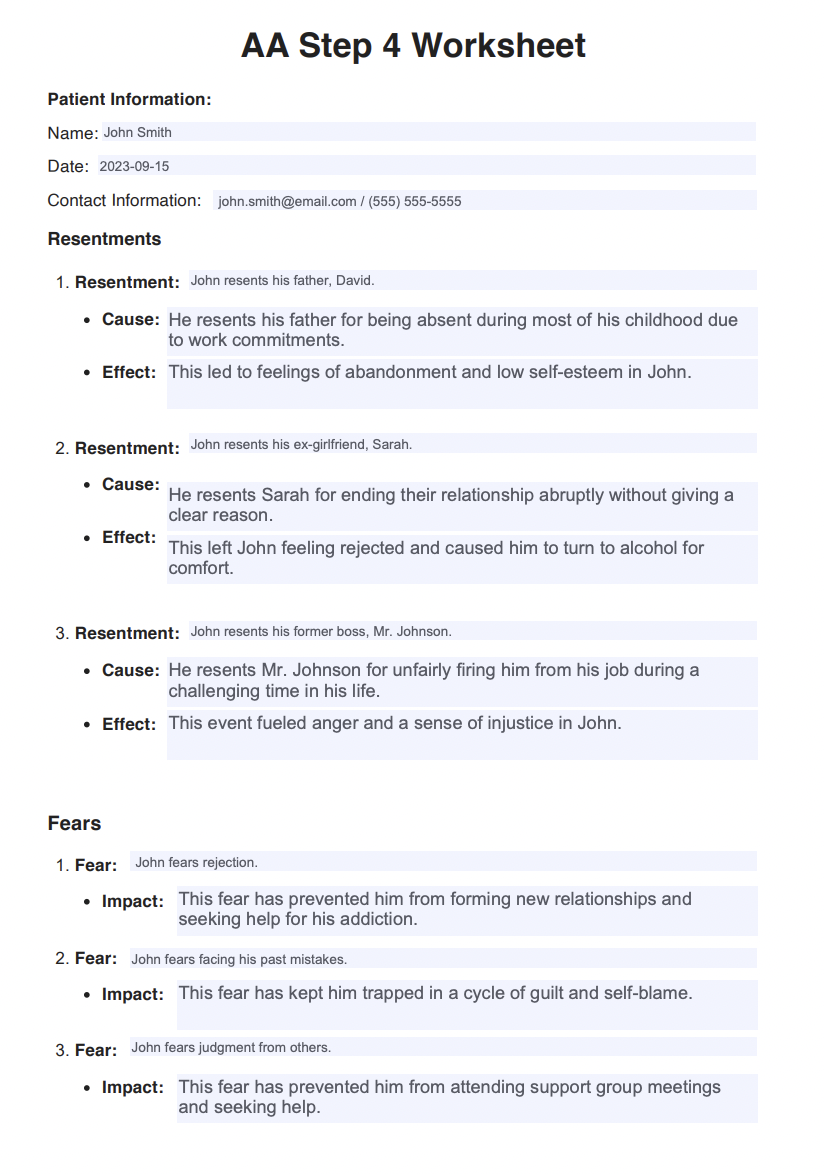
AA Step 4 Worksheets Example (sample)
The AA Step 4 Worksheet is a crucial tool in the Alcoholics Anonymous (AA) program, aimed at facilitating the fourth step of the 12-step recovery process. It initiates a reflective process of self-examination, beginning with personal information, such as your name and date, to set the stage for your moral inventory.
The worksheet focuses on identifying resentments, urging you to list individuals or situations that evoke such feelings and explore their causes and effects on your life. Fear is also addressed, with spaces provided to record your fears and confront your character defects, such as dishonesty or selfishness.
The worksheet encourages recognizing patterns and themes within your resentments, fears, and character defects. This identification helps you understand your behavior and triggers, clarifying the underlying causes of addiction.
Upon completion, the worksheet invites you to reflect on your findings. This self-inventory fosters personal growth and provides a foundation for making amends and healing. AA Step 4 Worksheets, often available as PDFs, offer a convenient way to engage in this transformational process as you progress toward recovery.
Download this AA Step 4 Worksheet Example:
When would you use this Form?
The AA Step 4 Worksheet is a valuable resource primarily intended for individuals seeking recovery from alcohol addiction through Alcoholics Anonymous (AA). However, it can also be helpful for various practitioners and professionals involved in addiction treatment and mental health support. Here's a concise list of situations where the AA Step 4 Worksheet can be appropriately utilized:
- Substance Abuse Treatment Programs: Addiction counselors and therapists can incorporate the AA Step 4 Worksheet into their treatment plans for clients dealing with alcohol addiction. It is a structured tool for exploring underlying issues, fostering self-awareness, and aiding recovery.
- Within 12-Step Programs: Professionals leading 12-step programs, whether in a clinical setting or community support group, can use this worksheet to guide participants through Step 4. It helps participants thoroughly examine their past and lay the groundwork for subsequent steps.
- Supporting Dual Diagnosis Clients: For individuals dealing with both addiction and co-occurring mental health disorders, therapists can use the AA Step 4 Worksheet to address the emotional and psychological aspects contributing to addiction.
- Peer Support Groups: Peer support leaders and sponsors within AA or similar recovery groups can introduce newcomers to the Step 4 process using this worksheet. It helps build a strong foundation for recovery.
- Aftercare and Relapse Prevention: The worksheet can be employed in aftercare and relapse prevention programs to help individuals maintain their sobriety by revisiting and refining their moral inventory periodically.
- Correctional Facilities: Counselors working with incarcerated individuals struggling with addiction can use the worksheet as part of rehabilitation programs, aiding inmates in addressing their past behaviours and making positive changes.
- Personal Growth and Self-Help: Beyond professional settings, anyone on a journey of self-improvement and reflection can use the AA Step 4 Worksheet independently. It's a versatile resource for fostering personal growth and self-awareness.
Benefits
Structured Self-Examination
The AA Step 4 Worksheet offers a structured and organized moral inventory approach. It guides individuals through a thorough self-examination process, helping them systematically delve into their past actions and experiences. This structure makes it easier for users to address potentially difficult or painful memories.
Enhanced Self-Awareness
By using the worksheet, individuals are encouraged to engage in deep introspection. They reflect on resentments, fears, and character defects that may have contributed to their addiction. This heightened self-awareness is a crucial first step towards personal growth and recovery, as it enables individuals to understand the root causes of their behavior.
Identification of Triggers and Patterns
The worksheet prompts users to recognize patterns and triggers in their thoughts and behaviors. Through this process, individuals can identify recurring themes that have played a role in their addiction. Recognizing these patterns is essential for making conscious choices and breaking free from destructive cycles.
Foundation for Recovery
Working through the AA Step 4 Worksheet is foundational to the 12-step recovery process. It helps individuals acknowledge their past wrongdoings and understand how these actions have affected their lives and the lives of others. This self-inventory is a solid foundation for subsequent steps, including making amends and achieving lasting sobriety.
Accessible and Cost-Efficient
Many AA Step 4 Worksheets are free online, making this valuable resource accessible to many individuals seeking recovery. The affordability and ease of access to these worksheets eliminate financial barriers and ensure individuals can engage in self-improvement and recovery without added financial stress.
The AA Step 4 Worksheet offers a structured, reflective, and cost-effective tool for individuals in recovery. It empowers users to confront their past, gain insights into their behaviors, and ultimately work towards a healthier, more fulfilling life free from addiction.
Research & Evidence
The AA Step 4 Worksheet is a fundamental component of the Alcoholics Anonymous (AA) program, founded in the 1930s by Bill Wilson and Dr. Bob Smith. While AA is not based on scientific research, it has a long history of effectiveness in helping individuals recover from alcohol addiction. The AA program, including worksheets for Step 4, has evolved through collective experiences and feedback from millions of participants worldwide.
The effectiveness of the 12-step program, of which Step 4 is a crucial part, is supported by a substantial body of anecdotal evidence and testimonials from individuals who have achieved and maintained sobriety through AA. These personal stories of transformation and recovery form a significant part of the historical evidence backing the program.
Studies and research papers have also examined the outcomes of individuals participating in 12-step programs like AA. While research findings can vary, many studies have shown that involvement in 12-step programs can lead to increased abstinence from alcohol, improved overall well-being, and better psychosocial functioning.
One notable study conducted by the National Institute on Alcohol Abuse and Alcoholism (NIAAA) in the United States found that individuals who engaged in 12-step programs like AA had better outcomes regarding abstinence and overall life satisfaction than those who did not.
The history and effectiveness of AA and the positive outcomes reported by countless individuals serve as compelling evidence for using tools like the AA Step 4 Worksheet. While the program's approach may not be rooted in traditional scientific research, its enduring impact on the lives of those in recovery attests to its significance in addiction treatment and support. Many addiction professionals recognize the value of the 12-step program as a valuable resource in the journey toward recovery.
Commonly asked questions

Individuals struggling with alcohol addiction, particularly those participating in Alcoholics Anonymous (AA) or similar recovery programs, typically use AA Step 4 Worksheets.
AA Step 4 Worksheets are used during Step 4 of the 12-step recovery process, which involves making a moral inventory of oneself. They are used when individuals are ready to confront their past and work towards personal growth and recovery.
The AA Step 4 Worksheet helps individuals by promoting self-awareness, identifying triggers and patterns, and laying the foundation for personal growth and recovery. It assists in addressing past wrongdoings, understanding character flaws, and ultimately leads to a healthier, more fulfilling life free from addiction.
Why use Carepatron as your AA Step 4 app?
Using Carepatron as your AA Step 4 app is a smart choice for several compelling reasons. Carepatron offers a comprehensive and user-friendly platform to facilitate the AA Step 4 process effectively. Here's why Carepatron stands out as the best place to engage in this critical work:
- Structured and Guided Experience: Carepatron provides a structured and guided experience for individuals working through the AA Step 4 process. The app offers clear prompts and questions that align with the principles of Step 4, ensuring that users comprehensively address their resentments, fears, and character defects.
- Easy Accessibility: Carepatron is easily accessible from various devices, including smartphones, tablets, and computers. This accessibility means that individuals can engage in their Step 4 work whenever and wherever it's most convenient.
- Privacy and Security: Privacy and security are paramount in self-exploration. Carepatron prioritizes the confidentiality of users' personal and sensitive information, ensuring that individuals can open up and address their issues in a safe digital environment.
- Progress Tracking: The app includes features for tracking progress throughout Step 4. Users can save their work, revisit it at their own pace, and track their personal growth and insights over time.
- Integration with Recovery Resources: Carepatron may offer integration with additional recovery resources, such as access to online meetings, literature, and guidance from experienced sponsors. This integration provides users with a holistic approach to their recovery.
- Data Back-Up: Users can rest assured knowing that their work is securely backed up on the platform, minimising the risk of losing valuable insights or progress.
.png)
References
Big Book Study Guide downloads. (n.d.). https://www.upperroomcomm.com/bbsguide/
BS, A. S. (2023, August 22). Ultimate Guide to AA Step 4 - Learn How To Write 4th Step Inventory with Big Book Awakenings Worksheet & Prayers. Infinite Recovery. https://www.infiniterecovery.com/addiction-recovery/step-4-12-steps-aa-importance-of-4th-step-inventory-how-to-do-it-worksheets-prayers/
FormsPal. (2022, November 10). Fourth step inventory – fill out and use this PDF. https://formspal.com/pdf-forms/other/fourth-step-inventory/
Fourth step worksheets guides and 12 steps study work sheets – Step12.com. (2021, July 25). https://step12.com/fourth-step-worksheets-guides-and-12-steps-study-work-sheets-280/
Karunaratne, S. (2021). How to work Step 4 | 12 step program tips & worksheets. Briarwood Detox. https://www.briarwooddetox.com/blog/how-to-work-step-four-12-step-program-tips-worksheets/
Michael, S. (2023, June 7). AA Step 4 Worksheet Inventory Guide (Excel Sheet). Sober Speak. https://www.soberspeak.com/post/aa-4th-step-worksheets
Step 4 & Tradition 4 worksheets. (2021, May 5). Emotional Sobriety and Food. https://emotionalsobrietyandfood.com/additional-step-worksheets-2/step-4/

Related Templates
