Telehealth businesses work to provide telemedicine and online healthcare services to patients using telecommunications technology. Telehealth businesses remove barriers faced by people who live in remote areas, have mobility issues, or struggle to find adequate healthcare services.
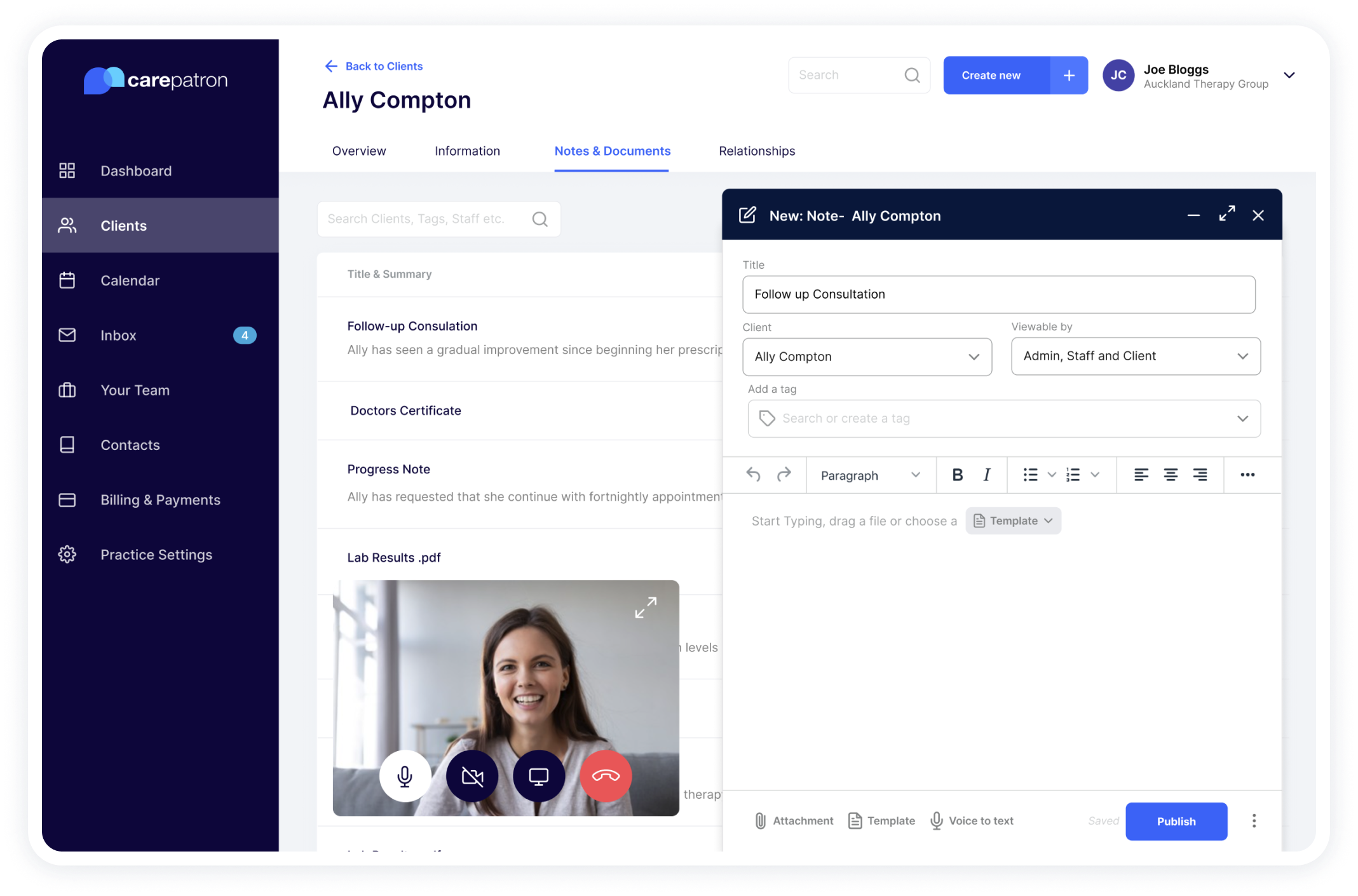

Bring all your work and information together in one ultra-secure solution.

Work with your clients, team, or partners, even if you’re on opposite sides of town.

When you spend less time on admin and paperwork, you can achieve almost anything.
.jpg)
Telehealth businesses work to provide telemedicine and online healthcare services to patients using telecommunications technology. Telehealth businesses remove barriers faced by people who live in remote areas, have mobility issues, or struggle to find adequate healthcare services.
The use of telehealth services has grown exponentially in recent years, particularly since the beginning of the COVID-19 pandemic. Telehealth businesses allow practitioners to consult with, treat and diagnose a wide range of patients while increasing flexibility and accessibility. It is a booming industry and unsurprisingly gaining a lot of interest from various healthcare practices.
Starting your own telehealth business is a huge step, but it’s a step in the right direction. We’ve summarized some of the necessary things to consider before you begin your own telehealth business.
Make sure you are aware of local regulations: Although good telehealth platforms are HIPAA-compliant and use encryption and other privacy measures, there are still certain restrictions in place. Make some research into your area and the rules and regulations regarding telehealth that might impact your services.
Decide what telehealth services your practice will offer: Some specialized courses will be able to provide all of their services using telehealth, including psychologists and therapists. However, other practices cover various services that aren’t easily transferred to an online platform. Decide what telehealth services your training will offer, and remember that you can always widen the scope later.
Find a platform: You will need to use a HIPAA-compliant online platform to help you achieve your goals in telehealth. These platforms provide safe, secure video platforms, improve clinical documentation, and encrypt and store patient information.
Let your patients know: The next step in starting telemedicine in your practice is informing your patients. Let them know they can access the same services they have been receiving from the comfort of their homes. Marketing is a crucial aspect of beginning any business, and where better to start than with your clients.


As with the beginning of any business, moving your services to a telehealth platform will have startup fees. Depending on your budget, and the services you aim to provide, these costs will vary.
Telehealth platform: If you are looking to start a telehealth business, you will need to select a telehealth platform that you can work with. Depending on what type of telehealth platform you decide to use, they can cost between $15000 to $50000. These platforms should be HIPAA-compliant and often include features like video conferencing software, secure documentation storage, organized appointment scheduling, and integrated billing.
Medical equipment: Some practitioners will require different medical equipment to work remotely, including examination cameras and digital stethoscopes. Depending on the necessity of this equipment, a package for basic care services will cost between $5000 to $10000.
Training: It is essential for practitioners delivering their services remotely to be comfortable and confident with this change. Training programs are available from $200 depending on the software being used.
Marketing: As with any business, obtaining clients is the best way to break even and ensure profit. Once you have decided to move to telehealth, spend money on marketing, so your clients know they have the option to receive care remotely.
Other: There are various additional costs associated with starting a telehealth business that will be dependent on the services you offer and the size of the company. These might include tech support, internet service providers, telehealth license, and other hardware and software costs.
Business models are a necessary first step that is often overlooked. The plan will serve as a guideline for the entire process of starting a telehealth business and indicate your budget and general timeline. The use of telehealth private practice software, hardware, and other new elements needs to be included and the costs required to set these up.
The business model should set target objectives with specific dates to ensure the sustainability of the business. It should also predict the patient volume required for the company to break even on costs and revenue. Although business plan templates will vary depending on the specific services and telemedicine offered by the practice, this template is a resourceful guide to what should be included in a business plan. It categorizes the plan into 15 steps, detailing background information, objectives, internal and external assessments (using SWOT analysis), and a marketing plan. You may choose to focus more heavily on the aspects of the business plan that are directly related to the services you will be providing and spend less time on unrelated sections.
The first step to beginning a telehealth business is creating a business plan. The more time you put into planning your business, the more likely you will be successful!


More and more people are accessing healthcare services remotely, supporting the development of new telehealth businesses. To ensure your success, you should decide what services you will offer, stick to your budget, and spend time on a business plan!
The telehealth market has grown into a global industry used by patients and practitioners around the world. In 2020, research suggested that the market size of the telehealth industry in the US stood at USD 144 billion.
Using telemedicine in healthcare increases flexibility and accessibility for both patients and practitioners. Telehealth can improve both patient engagement and general quality of health, and given the significant increase in the industry’s market size, it is fast becoming the future of healthcare!
Further Reading: