Progress notes are a form of documentation required for Acupuncturists. Although the specific modalities within these notes will vary amongst professions, the necessary general information is the same.
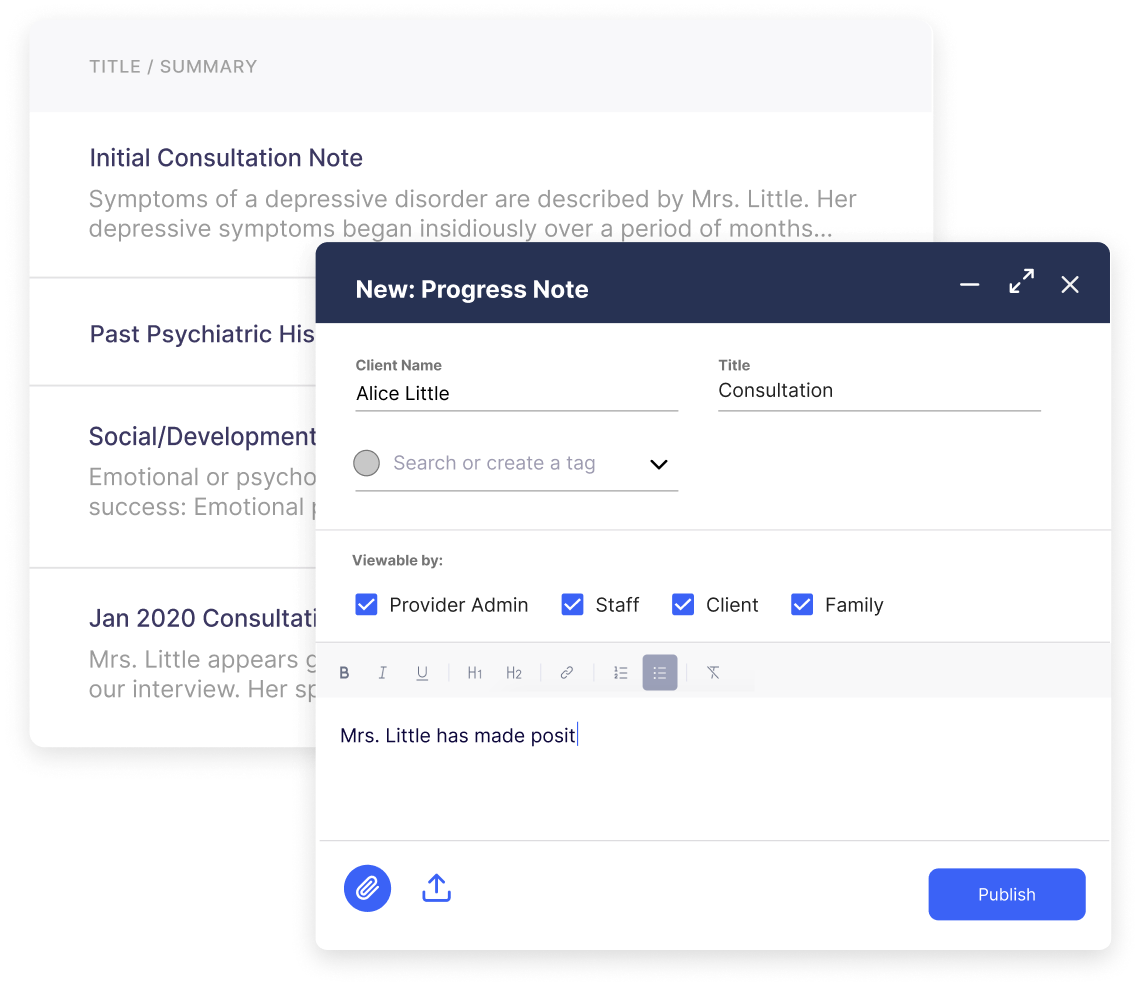

Take control of your schedule and calendar from your desktop or mobile app. Use automated appointment reminders and our fully integrated video calling tool to maximize your productivity.

Store all your patient information, clinical notes, and documentation safely in your secure clinic system. We autosave, so you'll never lose work again.

Carepatron online or mobile payments make it easier for your clients to pay for your bills. You save time a massive amount of time while getting paid twice as fast. What a great way to improve your day and cashflow!

Progress notes are a form of documentation required for all healthcare practitioners. Although the specific modalities within these notes will vary amongst professions, the necessary general information is the same. Creating practical clinical notes has been made easy by developing formatting templates and organizational and storage platforms. The SOAP format is one of the most widely used guidelines that separate progress notes into four categories.
Acupuncture notes can be documented in different ways depending on the preference of the practitioner. Writing a good acupuncture note requires specificity and conciseness. Acupuncture notes must be thorough enough so another practitioner could continue treating the patient using only the note as a reference.
Acupuncture notes should include the specific treatments used, including massages, herbal therapies, cupping, or the application of a heating pad. The effectiveness of these treatments and any progress noted in the patient should also be documented. Finally, practitioners must store their notes safely and securely, protecting the patient’s privacy. If requested, these notes can be viewed by the patient, other healthcare providers, and also in legal situations. Efficient acupuncture notes are beneficial to both the patient and practitioner, and following a template like SOAP can ensure that all required information is included.
Although there are various descriptions of the different categories within a SOAP note, an example is the easiest way to understand what this looks like for an acupuncturist. This template details the specific elements that should be included in each section of an acupuncture SOAP note.
The template can be used as a valuable guide to ensure your acupuncture progress notes contain all the necessary information.
Subjective: Symptoms described by the patient, including frequency, duration, and intensity; previous relevant medications; impact of the injury on patient’s life. Includes diagram to mark relevant areas of pain.
“I have had severe lower back pain for the past week. It hurts the most when I am sitting down”.
Objective: Recordings of vital signs; results of laboratory tests and x-rays; any swelling or discoloration; ROM (range of motion); and flexion, extension, and rotation of the spine (if relevant).
The patient had limited rotation in L5-L5 and reported pain. Left and right turns were within normal limits.
Assessment: Diagnosis of injury; comments on whether the patient improves since injury; general prognosis.
Qi-deficiency and blood stagnation. The patient reports symptoms worsening since the injury.
Plan: Details specific treatment plan, including time of next session. Includes description of treatment given to a patient during the current session.
Stabilize condition, control inflammation, reduce spasms and pain.
Hopefully, these examples should work as a guideline to ensure your acupuncture business is creating the most accurate and effective SOAP notes possible!


The process of constantly writing thorough documentation following every session with a patient can become tedious, which is why streamlining this process through a format like SOAP is extremely helpful. To make it as easy for you as possible, we have summarized a list of mistakes often made when writing SOAP notes.
Although they can be tedious, writing effective SOAP notes is a critical part of private practices. Organized documentation allows for the more excellent quality of care of patients and assists practitioners with clinical consideration and evaluation of treatment plans.
SOAP notes can also be requested by third-party’s, including other healthcare providers, insurers, and lawyers. If the notes are not accurate or thorough enough, both practitioners and patients may be disadvantaged. It is, therefore, in the best interests of acupuncturists to utilize a guideline like SOAP to streamline their documentation as effectively and efficiently as possible.
Further Reading: