Psychotherapy Progress Notes

Almost all psychotherapy practitioners require progress notes. Progress notes detail essential elements of a session with a patient, including the subject of the session, patient treatment, and any progress noted.
Free forever •  No credit card required  •  Access all features
Best Clinical Notes
Benefit of Progress Notes

The Progress Note Software you and your clients will love

Clinical appointment scheduling

Appointment Scheduling

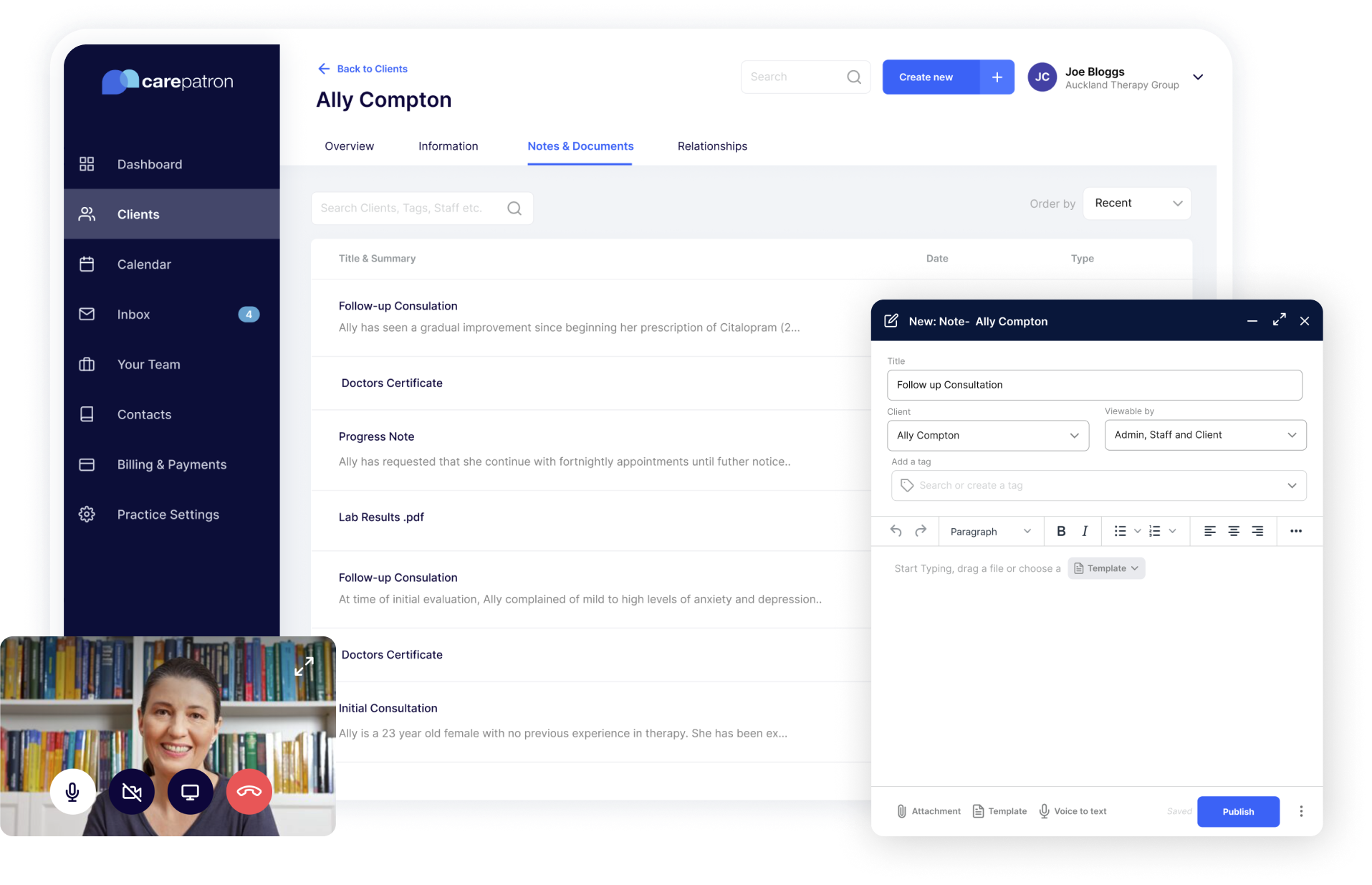
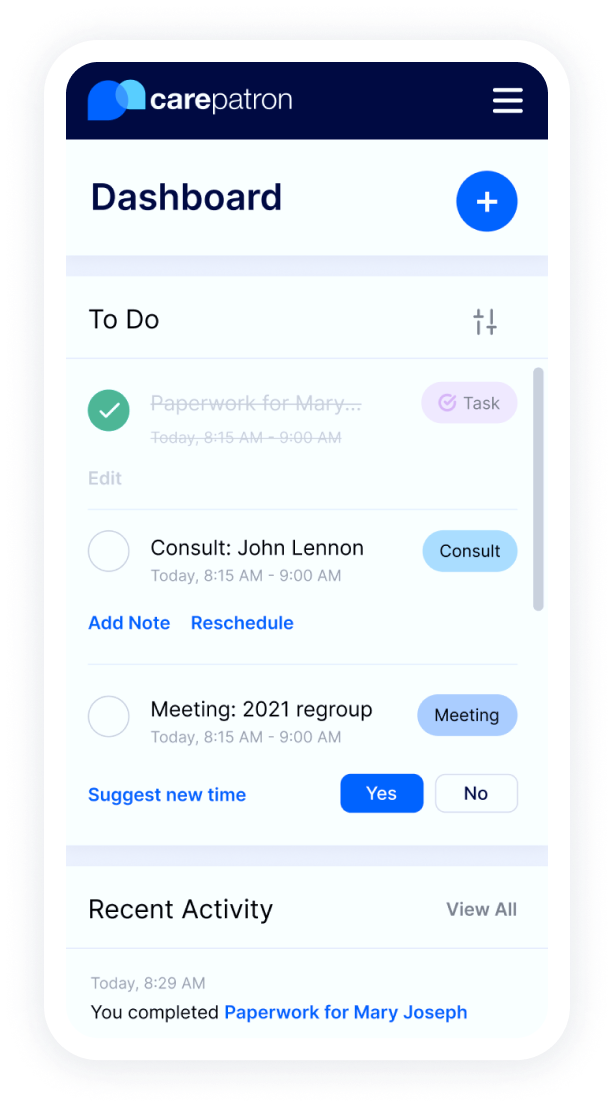
Take control of your clinic schedule and calendar from your desktop or mobile app. Use automated appointment reminders and our fully integrated video calling tool to maximize your productivity.

Clinical Notes and Clinical Documentation

Health Records

Store all your patient information, clinical notes, and documentation safely in your secure clinic system. We autosave, so you'll never lose work again.

Clinical billing and Clinical online payments

Accept Online Payment

Carepatron online or mobile payments make it easier for your clients to pay for your bills.  You save time a massive amount of time while getting paid twice as fast. What a great way to improve your day and cashflow!

Understanding progress notes

Understanding progress notes

Progress notes are required documentation that all psychotherapy practitioners complete. Progress notes detail essential elements of a session with a patient, including the subject of the session, patient treatment, and any progress noted. 

Depending on the preference of the practitioner, progress notes can be written and stored using hard copies or electronically. Online healthcare platforms can store clinical documentation using encryption and safe storage methods to ensure that all patient data maintains confidentiality and privacy. Psychotherapy Progress notes are a critical element of practicing psychotherapy; they assist in tracking patient progress and are often shared amongst other healthcare providers to elevate the patient’s quality of care.

How do you document mental health progress notes?

Documenting mental health progress notes can be done using various methods, depending on the preference of the psychotherapist. It is recommended that practitioners write their progress notes immediately after each session to ensure accuracy and efficiency. 

Clinical documentation, including progress notes, needs to be stored securely and safely. There are different methods to do this, and some online healthcare platforms include templates for writing effective psychotherapy progress notes and HIPAA-compliant organization and storage tools. The correct documentation of psychotherapy progress notes is critical; not only are they used by the practitioner to track the patient’s progress, but they can also be used in legal situations and by third parties, including other healthcare practitioners and insurers.

Psychotherapy progress note checklist

There are specific requirements for the production of practical psychotherapy progress notes. Various formats, including SOAP and DAP, can be used as guidelines for creating psychotherapy notes. We have summarized the different requirements of psychotherapy progress notes into a checklist to help make the best notes possible. Other practitioners can utilize this structure to develop effective progress notes, including in psychiatry, psychology, and counseling.

What should a psychotherapy progress note include?

  • Background information: Includes names of the patient and practitioner and details of the session, including date and length of time. 
  • Patient information: Refers to the patient’s behaviors, attitudes, and affect. 
  • Symptoms: Describes the specific symptoms that the patient is experiencing and whether these have changed or been impacted in any way. 
  • Test and Assessment Results: Includes results from any relevant tests that the patient has completed, including neurological scans or mood assessments. 
  • Diagnosis: The psychotherapist’s professional opinion on the patient’s diagnosis is objective and subjective reasoning.
  • Treatment and Future Plan: Treatment program designed to help the patient, and the date of the next session, if relevant. This section can also discuss any progress observed by either the practitioner or the patient regarding their treatment plan and whether any target goals have been reached.‍
  • Signatures: All progress notes are signed by the psychotherapist and stored in a secure, HIPAA-compliant manner.
Psychotherapy progress note checklist
Sample progress notes for mental health template + example

Sample progress notes for mental health template + example

Direct examples are often the most helpful resource when evaluating the best method of constructing progress notes. A PDF template created by ICANotes demonstrates an accurate and effective psychotherapy progress note. It is categorized into different sections, including behavior, therapy content, therapeutic intervention, diagnoses, and plan.

An alternative method of formatting psychotherapy progress notes is known as SOAP, commonly used by various mental health practitioners. We have included a description of each component of a SOAP note, as well as a brief excerpt from a psychotherapy progress note:

  • Subjective (S): Includes subjective information about the patient and their experiences. It often includes direct quotes from the patient about how they are feeling. 

The patient stated: “I feel okay today, but I think my anxiety might be getting worse.” 

  • Objective (O): Details the therapist’s observations, including any results from tests or assessments. 

Compliance with medication is okay. The patient has hindered work performance. Her relationships are reduced. She has reported an inability to fall asleep and stay asleep. 

  • Assessment (A): This section combines subjective and objective information, and the practitioner states their professional opinion on the patient’s progress. 

While the patient appeared calm during the session, she reported worsened anxiety during her daily life. She showed no signs of depression and seemed fully oriented. 

  • Plan (P): States whether the patient’s treatment is working and discusses any visible progress. This section also includes details of the next session.

The patient will focus on positive cognitive messages to replace negative thoughts. Treatment will continue, and the next session will be in a week.

Difference between progress notes and psychotherapy notes

Although progress notes and psychotherapy notes are both forms of clinical documentation, they serve different purposes and, as such, require further information. 

Progress Notes:

  • Written by any healthcare practitioner. 
  • Content includes subjective and objective notes on the patient, their treatment plan, and any visible progress.
  • It can be shared between other healthcare practitioners and used in legal situations or by insurers. 
  • HIPAA-compliant.

Psychotherapy Notes:

  • Written by psychologists, psychiatrists, counselors, and psychotherapists.
  • Content includes information regarding the practitioner’s opinions, thoughts, and hypotheses on the patient. Psychotherapy notes do not include information on diagnoses or past medical treatment. 
  • Kept private from the patient and other care providers. 
  • HIPAA-compliant.

Progress notes you and your client will love

Although writing good progress notes can be time-consuming, the benefits of an effective progress note are significant for both patient and practitioner. Psychotherapy progress notes are used for practitioners to track their patients’ progress and are indicative of whether treatment plans are successful. 

Progress notes by private practices can be shared amongst other healthcare providers to ensure the patient is receiving the best quality of healthcare possible and being used as protection against potential lawsuits. The process of writing progress notes differs depending on personal preference, but following a template like SOAP will ensure that the psychotherapist includes all the information necessary to guarantee their own and their patient’s wellbeing. 

Further Reading:
Difference between progress notes and psychotherapy notes

Join 10,000+ Healthcare Professionals using Carepatron to be more productive.

One app for all your healthcare work

The All-In-One Practice Management Software for Healthcare.

Get Paid Faster With Effective Therapy Billing Software
Common Mental Health Note Taking Challenges (And How To Get Around Them)
Mental health refers to an individual’s emotional, social and psychological well-being. It has a significant impact on how we think, feel and interact with the environment around us. Mental health practitioners, including psychologists, psychiatrists, counselors, and therapists, are trained to strengthen and improve mental health so that individuals can comfortably and confidently function in all spheres of their lives.
Common Psychologists mistakes
Six examples of what not to do when writing progress notes
Progress notes are the best way to record every point of communication between you and your client and pave the way for the highest level of care. Although legally required, clinical progress notes are an excellent way to summarise valuable insight from your patient’s progress and in a way that other healthcare professionals can easily interpret.
Starting a Psychology Private Practice
What To Look For In Progress Notes Software
Progress notes are a form of clinical documentation written by healthcare practitioners that document a patient’s symptoms, diagnosis, treatment, and clinical achievements. Not only are progress notes a critical aspect of maintaining good patient-practitioner communication, but they are legal documents that can be viewed by third-party’s. This often occurs in legal disputes, insurance claims, or when family members or caregivers understand how the treatment progresses.