Progress notes are detailed notes written by a clinician containing essential information regarding a session with their client. Mental health practitioners create mental health progress notes with objective and subjective information about the patient, the treatment plan designed for the patient, and any observed progress.
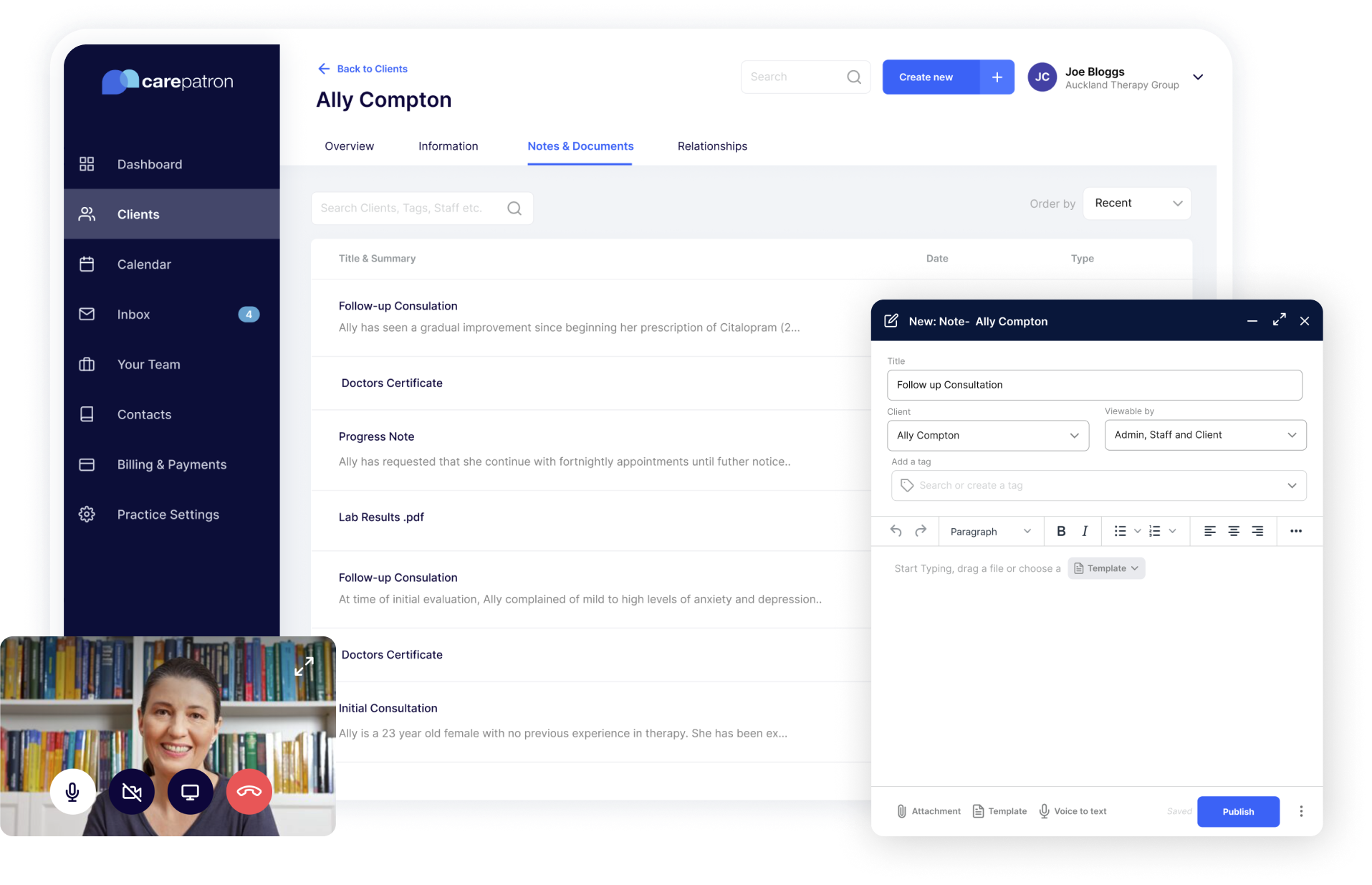

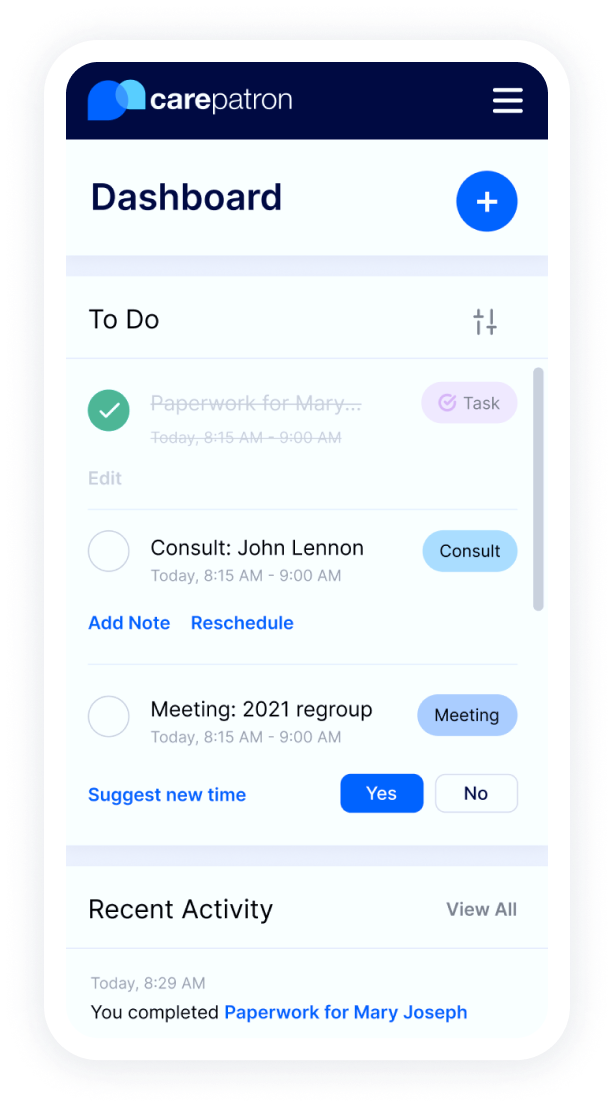
Manage your schedule, tasks, and reminders from within one medical billing app. Use appointment reminder automation and video calling to maximize your billable time.

Record and store all of your client information and clinical documents safely in a secure practice management system. Our autosave will help to ensure you never lose work again!

Online Medical Payments make it simple for your patients to pay online. You get paid twice as fast while saving time. What a fantastic way to improve your practices cashflow!

Progress notes are detailed notes written by a clinician containing essential information regarding a session with their client. Mental health practitioners create mental health progress notes with objective and subjective information about the patient, the treatment plan designed for the patient, and any observed progress. Once written, these progress notes must be stored securely and confidentially, aligning with a medical compliance program.
The progress notes need to be succinct, accurate, and relatively objective, as they are often shared between other people working with the patient, including healthcare practitioners and insurers. Progress notes can also be used in legal situations to evaluate the decisions made by practitioners. To consolidate your knowledge, we have compiled information regarding why mental health progress notes are so important, different formatting structures that can be used, and general pitfalls that should be avoided.
A mental health progress note refers to a progress note created by a mental health worker, documenting the relevant information from a session with their client. These progress notes highlight the patient's treatment plan, their progress in treatment, and general observations about behavior.
Different methods of documenting mental health assessments can be utilized, depending on what suits the practitioner and whether they conduct their work remotely or in person. Mental health care practitioners often use online services that provide electronic records for your practice. These services are an effective way to ensure the safety and privacy of mental health assessments while also being accessible and organized for the practitioner.
Writing a concise mental health progress note can seem like an overwhelming task. This process has been simplified by various formatting structures developed to ensure that progress notes are written adequately and convey the appropriate information. Practitioners in different fields, including psychologists, psychiatrists, and counselors, will vary in the information included in progress notes relative to the service being provided. Practitioners will differ in whether their progress notes are hard copies or written electronically and whether they take their notes in-session or afterward.
Despite these differences, health care workers may structure their progress notes using formats that provide guidelines for how progress notes should be written, including SOAP, BIRP, and DAP. Generally, mental health progress notes include subjective and objective information regarding the patient and how they are responding to treatment and comments on the treatment plan and any progress observed in the patient.

Of the formatting guidelines mentioned previously, SOAP is likely the most commonly used technique. It categorizes the information necessary for progress notes into four sections. We have included a summary detailing what these sections entail:
BIRP formatting structures are also commonly used to create mental health progress notes. Although they contain similar information to SOAP notes, their design differs slightly:
ICANotes have created a mental health note template based on a session with a psychotherapist. The template organizes information into behavior, therapy content, therapeutic intervention, and diagnoses/plan.
Guidelines to writing a practical mental health progress note can be further consolidated by knowing the information that shouldn’t be included and common pitfalls that can lead to ineffective progress notes:
Hopefully, this article has consolidated your knowledge on the different ways that mental health progress notes can be written, why they are important, and common pitfalls that should be avoided.
Recently, services have been developed that improve the organization and safe storage of progress notes. Carepatron is a platform that safely secures clinical progress notes and provides various templates that practitioners in different fields can use. Documenting mental health progress notes electronically allows practitioners to organize all of their information while guaranteeing safe-keeping effectively.
Although there are numerous formats to help write progress notes, including SOAP and BIRP, you will have seen that these contain similar information. When writing mental health progress notes, the essential aspect is ensuring that the required information is documented in a digestible format.