A patient portal is an application that a clinic uses to provide a two-way method of communication between patients and physicians. Patient portals' implementation and regular use have grown significantly in recent years. Patient portals can be accessed 24/7 and generally contain information regarding appointments and payments.
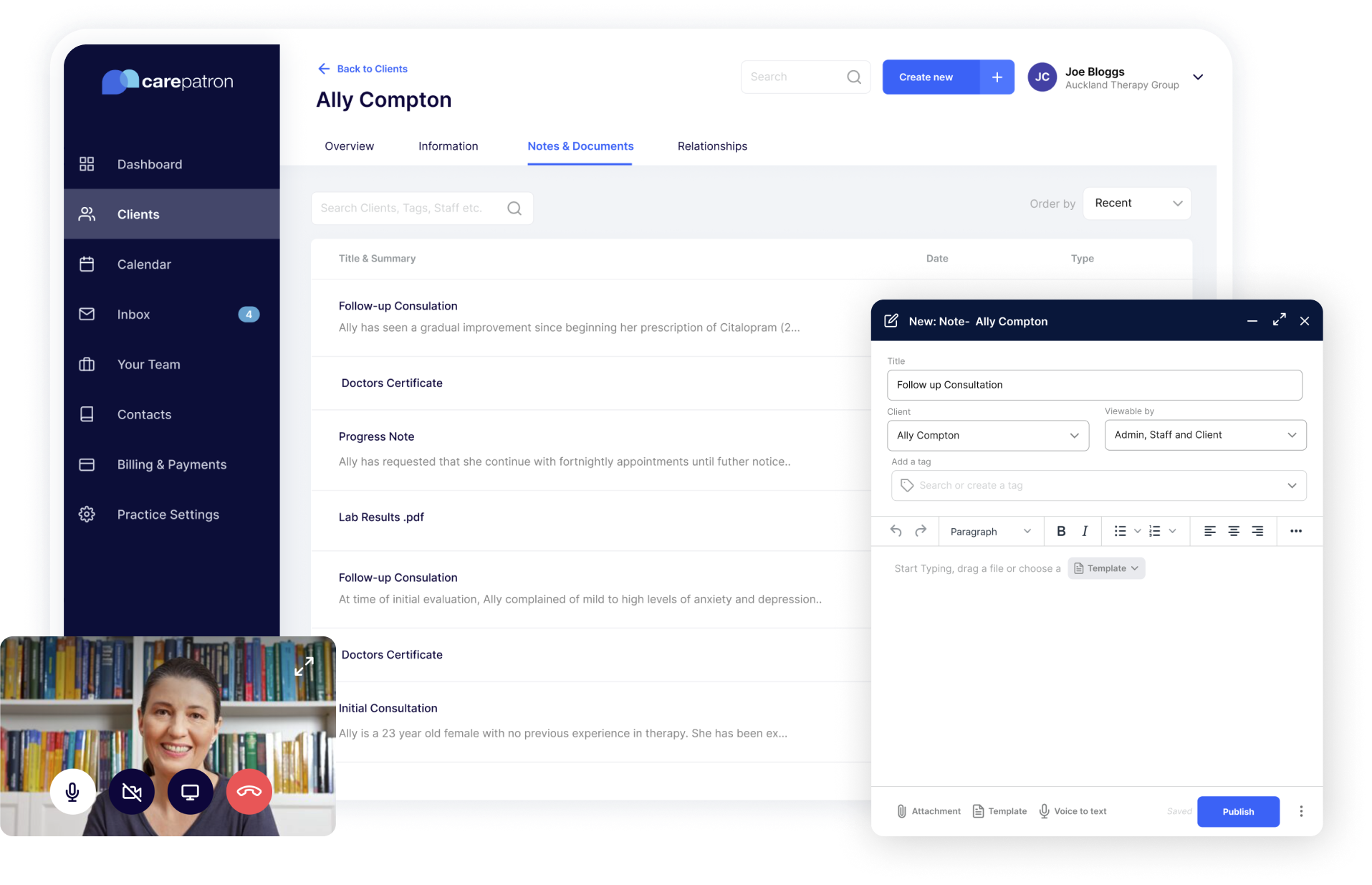

Be in control of your calendar at all times. Quickly schedule client appointments, send appointment invites and automate your email and SMS reminders with two simple clicks. Use your own fully integrated Telehealth video calling to allow you to provide virtual services whenever you need.

Safely store your patient information in your very own EHR system. You can use our progress note templates or integrated assessments to maximize your productivity and treatment outcomes. Ensure your patient records are HIPAA compliant no matter how busy you are.

Mobile Payments make it easier for your patients to pay you. Reduce the time it takes to invoice, receive payments, reconcile billing, and get paid in your healthcare practice. An excellent way to save time and improve cashflow!

A patient portal is an application that a clinic uses to provide a two-way method of communication between patients and physicians. Patient portals can be accessed 24/7 and generally contain information regarding appointments and payments. The implementation and regular use of patient portals has grown significantly in recent years. A survey in 2015 found that 15% of hospital patients and 30% of physician patients accessed patient portals. In 2018, these numbers had risen to 52%. Secure direct messaging features improve communication and ensure that patients and physicians stay connected with a patient portal. They also allow clients to be self-sufficient, streamlining various administrative tasks like scheduling appointments. Allowing patients to manage these processes has the bonus of saving medical practices significant amounts of time and resources.
As well as streamlining administrative tasks, patient portals can improve patient healthcare. Patients have more accessible and faster access to communication channels with their physicians, giving them a platform to ask questions or raise concerns. For example, a patient can request a renewed prescription via their portal, eliminating the need to phone the medical clinic or book an appointment. Patient portals usually contain client information, including electronic health records and various other forms of medical data. When a patient comes into your clinic, the system you use will include all the information required to treat your patient effectively. Patient portals ultimately facilitate a more meaningful healthcare experience and allow patients to have a more significant role in managing their care.

.jpg)
Implementing patient portals is a secure way to improve the patient experience at your healthcare practice. Depending on the requirements of your business and the portal provider you use, patient portals can include direct messaging, online payments, real-time lab results, and medication information. These features facilitate a seamless experience at your clinic and ensure that patients are heard and their needs are met. Carepatron offers HIPAA-compliant software for healthcare businesses with an effective and reliable patient portal. Healthcare practitioners from various fields have used Carepatron to improve their relationships with patients and ensure that every client receives the highest healthcare quality possible.
Further Reading:
.jpg)

.jpg)