
As any massage therapy business knows, there is no way to avoid tax returns. To ensure accuracy, you must manage tax deductions carefully.
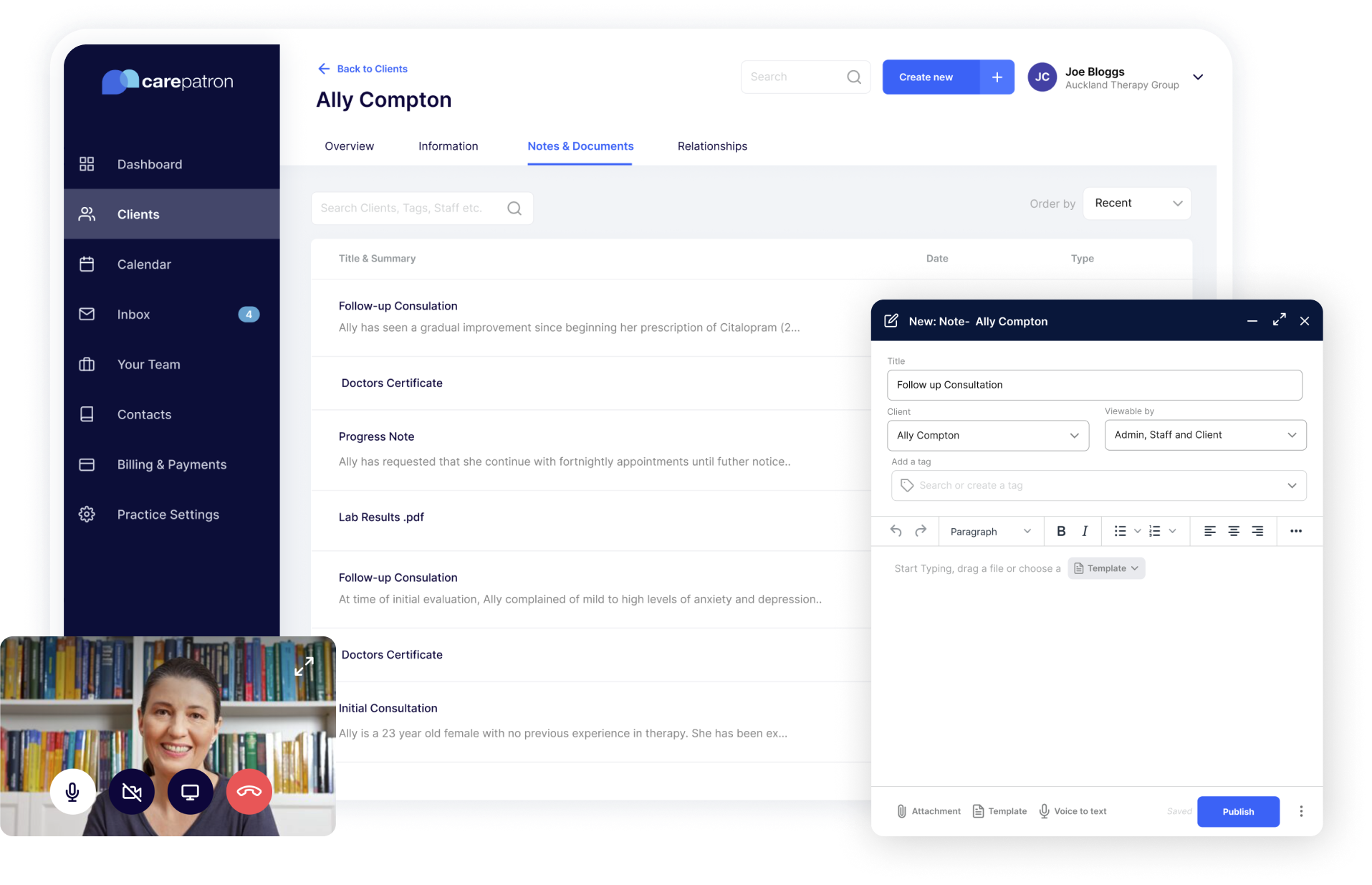

Store all your patient information, clinical notes, and documentation safely in your secure clinic system. We autosave, so you'll never lose work again.

Take control of your healthcare schedule with smart calendar management and scheduling tool. Use automatic client reminders and fully integrated telehealth video calling to give you the tools and flexibility to run a modern practice.

Carepatron online or mobile payments make it easier for your clients to pay for your bills. You save time a massive amount of time while getting paid twice as fast. What a great way to improve your day and cashflow!

As any business knows, there’s no way around tax deductions, as they are an essential component of financial operations, as well as being a legal requirement. Tax deductions refer to the business expense where you subtract the value of items from your taxable income to lower the amount of taxes you owe. It’s financially beneficial and ensures that you’re appropriately reimbursed where possible. Even as a massage therapy practice, it is of utmost importance that you carefully consider them and that you can wrap your head around their ins and outs. Luckily, we’re here to help!
Before you start cranking the numbers, it’s important that you’re aware of the following figures pertaining to your massage therapy business expenses.
Gross income refers to a number of factors that contribute to your overall income. This can include your wages, capital gains, business income, any dividends, as well as retirement distributions. There are various adjustment items that may be included, of which you may need to do further research to ensure you’re counting accurate aspects and numbers. Regardless, gross income is vital to know before doing taxes, as tax reductions can affect the height of your gross income.
You should also keep track of all your business expenses, as taking notes ensures that you’re not overspending, that you stay within budget, and that you’re able to make a profit. Expenses can refer to technology costs, resources, advertising, legal fees, and essentially anything that contributes to your overall business operations. Recording this information can also highlight areas where you may need to improve, such as reducing no-shows, which can be rather costly. Being meticulous about noting this information may allow you to make claims and receive money back, which is always ideal.


It’s important to note that there are various deductions that you can claim for your massage therapy practice, which is great for increasing disposable income to create business value where needed.
Sometimes hosting dinners and lunches are essential to fostering professional business connections, and you may be surprised to know that some meals can be considered deductible by the IRS. If they aren’t extravagant, you can use the information on your receipt to get money back that was spent. Food purchased for open houses, including snacks offered to your clients, is 100% deductible, whereas other occasions are more likely to be 50% deductible.
If you need to travel for business, regardless of the length of time spent, you can receive tax deductibles. Sometimes you may be called to business trips to clients’ homes, or to health conventions, and in these cases, it’s important you keep a record of all financial information. Keep a spreadsheet or datebook that notes this information throughout the year, as every component can add up quickly.
In a similar vein, if you’re traveling on business and using your vehicle, you can deduct the cost of gas, tolls, and parking, which is always convenient. Rental car costs are also included, which is beneficial considering the high costs of car travel!
You can deduct no more than $25 per person annually, and any expense more than that is only included if it is considered incidental. This means packaging and mailing costs can also be covered, which is important to keep in mind! Gifts are a great gesture and can go a long way with professional relationships, so it’s good to make the most of this when possible.
If you or any of your staff require further training at a massage therapy school or organization, you can include this within your tax deductions. They are considered a business essential, with education contributing to improving your quality of service and keeping up to date with any potential certification standard renewals.
Any business setup costs are included, which refers to certain equipment, such as laptops, as well as recurring rental costs. Anything considered essential to the startup operations of your business can be regarded as deductible.
It’s only natural that you’ll need to get the word out there regarding your services, so some marketing expenses can be included. This includes Google Adwords, and Facebook ads to name a few! They’re a great way to increase referrals and reviews, and can remind prospective clients of the benefits of your care.
Many massage therapy businesses work from home, as it’s both convenient and often cheaper than renting out a facility. Because it’s so common, and you may fall under this category, it’s important that you become acquainted with the many different tax deductions and write-offs that you can claim as a massage therapist who works from home. After all, you certainly do not want to miss out on ways to solidify your financial records and increase your disposable income. This also does not mean you have to be working within a completely separate room within your home. If you work within a larger dedicated section of your space, you are also eligible for tax deductions! Some expenses that can be deducted include your mortgage interest, rent, insurance, maintenance, and any real estate taxes. This is in addition to utilities such as power, gas, and wifi, which are all used during your massage sessions. For exact amounts that you can deduct, it is recommended that you consult with the office deduction section on Form 8828, and enter the allowable expense on line 30 of Schedule C.
Keep in mind that the IRS is very particular about home expenses, so it’s important to always keep meticulous records and documentation. For example, you could take a photo of the space you claim, so appropriate audits can be made. You’ll also need accurate financial records, and the space you designate for your business is solely used for business purposes.


In light of this information, it is critical that you are aware of common expenses that cannot be claimed as deductions. The IRS strictly prohibits doing so, and failing to adhere to these standards can result in severe legal repercussions, which not only are costly but can be a blow to your reputation.
Parking tickets and court fees are not able to be claimed back from the IRS and are considered your personal responsibility to take care of. Regardless of the circumstances in which they were charged, it is unlikely that the IRS will view your situation favorably, and it is best to write these off as your own expenses.
Life insurance premiums, where you are the beneficiary, are also not considered deductible by the IRS. Even if you have taken this premium or policy out in order to finance a business loan, it is still not tax deductible.
Understanding tax deductions can be confusing at first and intimidating when envisioning the consequences. However, hopefully this guide has provided you with valuable details concerning what tax deductibles are, and what expenses you can and cannot deduct. Keeping accurate documents of every expense, no matter how trivial you perceive it, can result in a higher likelihood of your money being reimbursed, which is always ideal. With increased income, you can work towards creating a relaxing environment within your massage clinic that works to increase customer retention and satisfaction. Tax deductions do not have to be complex, and with the right resources, you’ll be okay!
Further reading:


