
What Is A Healthcare Audit And Why Should You Plan For It?

Healthcare audits are a vital component to successful healthcare businesses, providing a detailed analysis of the quality and standards of healthcare practices. The audits ensure that healthcare outcomes and practice management systems are consistent and compliant with healthcare guidelines.
Free forever •  No credit card required  •  Access all features
Best Clinical Notes
Benefit of Healthcare compliance

Healthcare Compliance you and your clients can trust

Clinical appointment scheduling

Appointment Scheduling

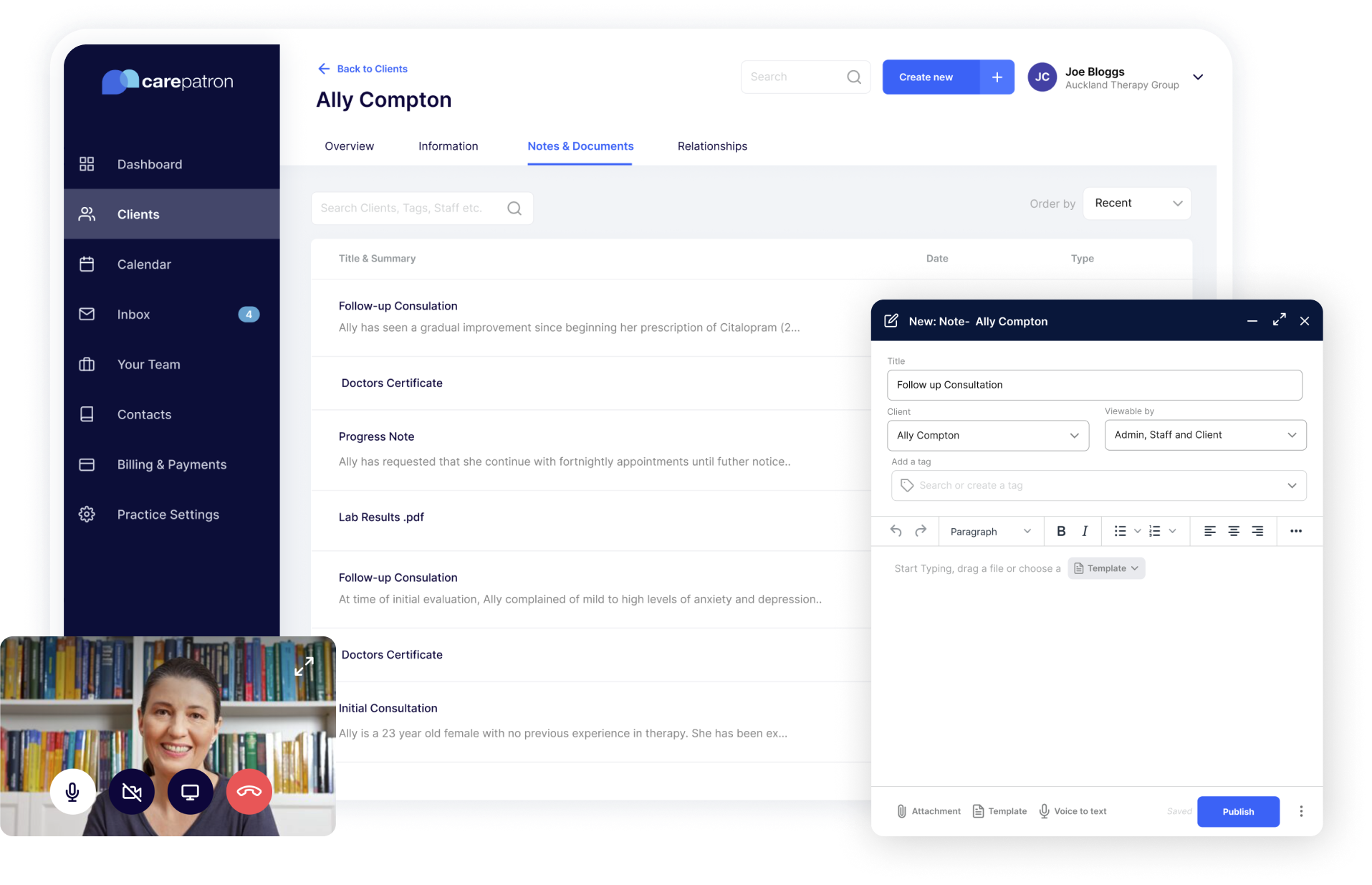
Take control of your schedule and calendar from your desktop or mobile app. Use automated appointment reminders and our fully integrated video calling tool to maximize your productivity.

Clinical Notes and Clinical Documentation

Health Records

Store all your patient information, clinical notes, and documentation safely in your secure clinic system. We autosave, so you'll never lose work again.

Clinical billing and Clinical online payments

Accept Online Payment

Carepatron online or mobile payments make it easier for your clients to pay for your bills.  You save time a massive amount of time while getting paid twice as fast. What a great way to improve your day and cashflow!

What is a healthcare audit?

What is a healthcare audit?

Healthcare audits are a vital component to successful healthcare businesses that provide a detailed analysis of the quality and standards of healthcare practices. The audits ensure that the practice is meeting healthcare outcomes, and that practice management systems are consistent and compliant with healthcare guidelines. Quality checks can also identify areas of weakness that need addressing and improving within clinics, as well as holding certain individuals responsible. 

Healthcare auditing is an indisputable healthcare activity that you must incorporate in order to prioritize patient needs and ensure information is kept private and confidential. It is a secondary security process that works towards increasing your reliability, as well as reputability. Considering that over 57% of healthcare business mistakes are concerned with auditing, you must understand how to implement the right processes, and keep up with standards that are often quite complex. Many companies offer healthcare software with embedded resources and templates for medical compliance you can count on, that can greatly boost the quality of your services. Regardless of your choice, it is necessary that you understand the workings of healthcare audits, and how they can benefit your practice. 

Examples of a healthcare practice audit

To help illustrate the idea of healthcare auditing, and to provide a concrete application of what it is, we have compiled some audit examples. As auditing can take on various forms and can differ depending on the discipline and needs of your healthcare practice, examples of auditing may look like this:

  • Clinical procedure audit - Audits of all medical processes and procedures by clinicians are a leading option to evaluate the clinical efficacy of your practice.
  • Patient satisfaction - Auditing patient satisfaction, mainly through surveys, is a great way to assess the strengths and weaknesses of your business.
  • Annual performance - This is a great way to assess your year in review and to examine the broader picture of areas of health that need improvement.‍
  • Health delivery - Auditing health delivery through comparison to recognized benchmarks and standards is an easy way to assess how your business is performing on international and local standards.

Top reasons to plan for a healthcare audit

Aside from legal purposes, healthcare audits are essential to reviewing care management plans and elevating the quality of service for both your healthcare team and patients. Healthcare auditing provides a variety of benefits and is highly significant for you to plan for, with reasons including:

  • Improved patient care - Clinical auditing can support patient care by systematically analyzing and identifying areas that need improvement, allowing greater emphasis on establishing strong performing areas.
  • Easy trend identification - Auditing data allows for greater trend identification, as using software systems commonly implemented in private practice software can highlight potential risks and opportunities to amend and take advantage of. Using trends, you can improve business processes, which all contribute to increased patient satisfaction and more effective treatments. 
  • Identify improvements - Through the data analysis that auditing presents, healthcare practices can identify areas that are weaker or stronger than others, and can work towards improving clinical outcomes and the quality of service to patients. These improvements will attract more patients to your clinic, increase revenue, and boost productivity amongst your healthcare team. You can develop faster processing and transaction systems to increase efficiency, and improve medical record management.
  • Protects physical health - Especially within the current Covid climate, auditing has become an integral feature to ensure that patients' and professional healthcare staff’s physical health needs are taken care of. Auditing can ensure that the right social distancing practices are in place, as well as that the right Covid management procedures are implemented. 
  • Produce insight - Any audited information can produce valuable insight into all areas of business processes within your healthcare practice. Having this information can help you make informed and educated decisions when it comes to your patients, and aids in your understanding of how patients respond to certain treatments and health practices. You can improve waiting times, interactions, as well as other clinical procedures.
Top reasons to plan for a healthcare audit
Which are the most common healthcare violations to look out for?

Which are the most common healthcare violations to look out for?

To help you avoid non-compliance fines, we have compiled some of the most common violations when it comes to healthcare. Knowing these common pitfalls will enable you to continue providing high-quality care that recognizes patient needs, and awards them with the highest continuity and coordination of treatment possible. 

  • Lack of documents - Healthcare practices frequently aren’t given the required disclosures or notices that inform them of their summary plans and processes that need addressing. Healthcare practices must provide the relevant documentation upon request to external parties, and vice versa, external organizations must notify clinics of the information needed. 
  • No summary plan descriptions (SPDs) - Employers need to assess their summary plan descriptions and ensure that they are understandable, with accessible language. ‍
  • Lack of expertise - Many individuals who fill designated senior clinical positions often do not have the knowledge to be able to answer and follow-up queries efficiently and accurately. This can cause a variety of issues in terms of organizational flow, as well as a lack of coordination across teams, which is ineffective for treating patients and prioritizing their needs. Not to mention financially risky for your business, as incorrect information or staff lacking expertise can interfere with the auditing process, which may result in fines.

Tips to effectively prepare for a compliance audit

To ensure that your auditing process runs smoothly and supports efficient business operations, it is in your best interest to incorporate the following tips to effectively prepare. 

  • Train your employees - To ensure that HIPAA and security standards are up-to-date and are appropriately handled, it is important to provide the right resources to your staff. Employees should be able to efficiently handle privacy and security processes, with the right maintenance processes in place to store medical records. 
  • Perform internal audits - Assess the infrastructure of your practice through internal auditing. Continuous auditing cycles allow for detailed findings of any faults, issues, and general inadequacies that can be improved to elevate clinical outcomes and patient satisfaction.
  • Analyze policies - Healthcare auditing is a continual, iterative process, and concerns reviewing current policies to ensure that they are HIPAA compliant and accessible to users. They should satisfy international and federal standards, as well as be appropriate to the needs of your business. 

Final thoughts

Healthcare auditing allows you to continually evaluate and assess healthcare policies, practices, and standards that your healthcare business implements, and whether these are relevant and necessary for patient healthcare. It allows you to easily identify strengths and weaknesses for future improvement, and with businesses such as Carepatron, you can master the audit process. While it can be a learning curve, auditing is a necessary practice that ensures higher patient satisfaction and clinical outcomes, through organized information that is compliant and secure. Regardless of the specific platform you choose, auditing processes are undeniably effective, and your patients will come to appreciate resources and templates as informational tools concerning medical compliance and their general health. 
Tips to effectively prepare for a compliance audit

Join 10,000+ Healthcare Professionals using Carepatron to be more productive.

One app for all your healthcare work

The All-In-One Practice Management Software for Healthcare.

Get Paid Faster With Effective Therapy Billing Software
List of regional links and resources for official health regulations
Healthcare policies and procedures refer to a set of standards that are in place to ensure that patient data and information is being handled properly, and that your organization is not breaching any legal, ethical or professional responsibilities. Whilst the necessity of implementing standardized policies is universal for all healthcare organizations, different practices will have their own way of managing these procedures.
Common Psychologists mistakes
Latest developments with the [LOCAL health regulations]
The public health system is almost always mentioned when it comes to healthcare, and in a lot of ways, they go hand-in-hand. Public health is considered the backbone of healthcare operations, and works towards preventing diseases and promoting health through local and state public health agencies. It is a very broad system, and if you have any experience within healthcare, then you must know how complicated these services can be.
Starting a Psychology Private Practice
Latest developments with the [LOCAL health regulations]
The public health system is almost always mentioned when it comes to healthcare, and in a lot of ways, they go hand-in-hand. Public health is considered the backbone of healthcare operations, and works towards preventing diseases and promoting health through local and state public health agencies. It is a very broad system, and if you have any experience within healthcare, then you must know how complicated these services can be.