
Corporate healthcare compliance refers to the process of ensuring your business and all of its employees follow and adhere to laws, regulations, standards, and ethical practices relevant to your industry.
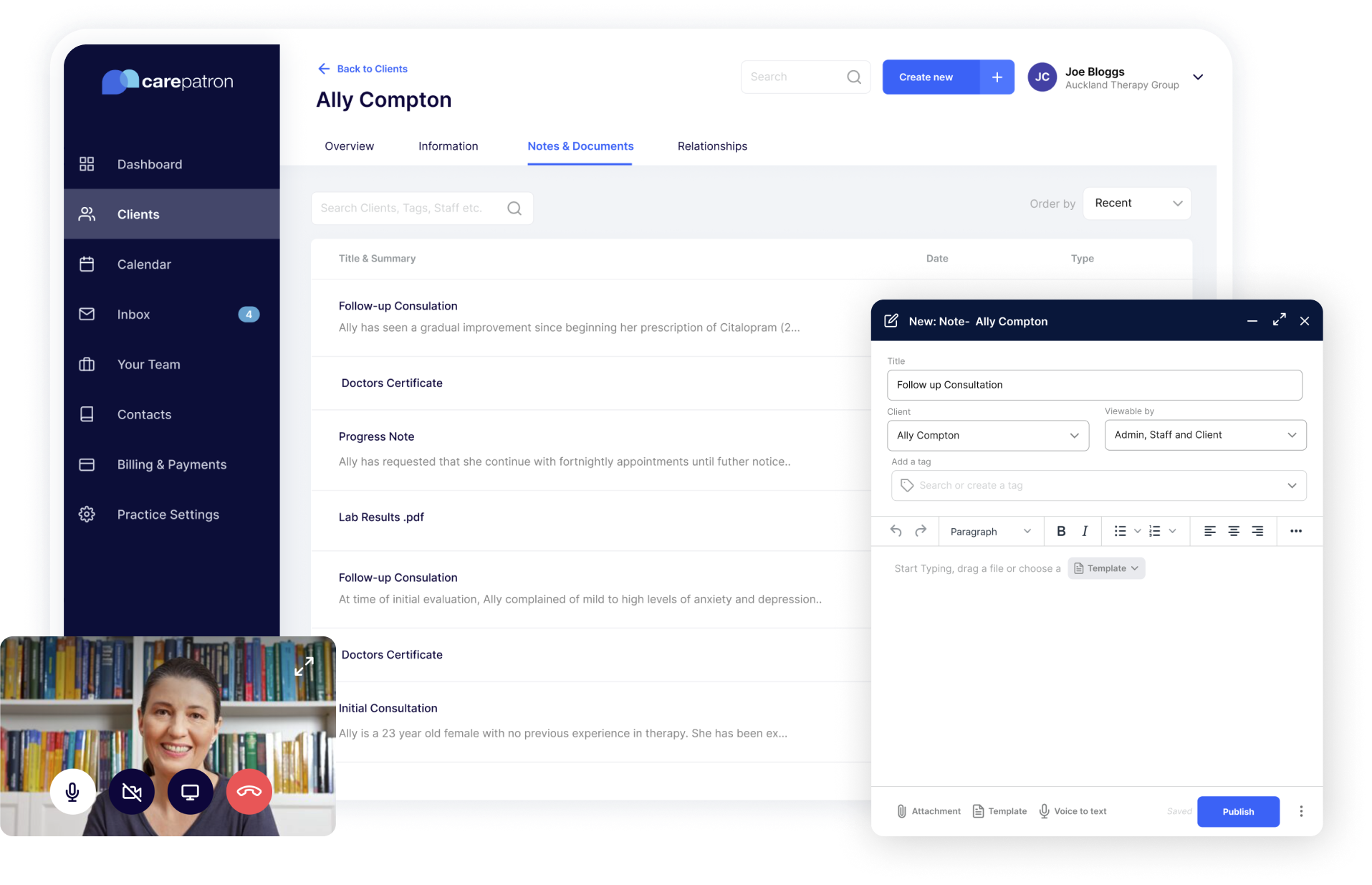

Take control of your schedule and calendar from your desktop or mobile app. Use automated appointment reminders and our fully integrated video calling tool to maximize your productivity.

Store all your patient information, clinical notes, and documentation safely in your secure clinic system. We autosave, so you'll never lose work again.

Carepatron online or mobile payments make it easier for your clients to pay for your bills. You save time a massive amount of time while getting paid twice as fast. What a great way to improve your day and cashflow!

Corporate compliance refers to the process of ensuring your business and all of its employees follow and adhere to laws, regulations, standards, and ethical practices relevant to your industry. This is inclusive of both federal and state laws, with corporate compliance aiming to protect your company from security breaches, as well as helping your organization identify areas of weakness that need amending. Within the context of healthcare, it is easy to see that rules are always changing and evolving, which can sometimes make them difficult to keep up with. In fact, for a lot of businesses, this is a prominent issue, with over 58% of healthcare financial losses occurring on behalf of compliance failures. Implementing compliant health procedures will allow you to elevate the quality of your service, and reach a higher level of responsibility and care when it comes to patient information.
Corporate compliance is essential to not only protect your patient’s information but also your business data. Complying with privacy and security laws can significantly reduce the risk of fraud, discrimination, and other disruptive operations that violate policies and jeopardize the success of your company. This means that adhering to medical compliance procedures can allow you to strengthen and build trust between you and your clients, and increase efficiency within management systems. Staff compliance is also a significant aspect that contributes to overall corporate compliance, as your employees need to understand security protocol and how to handle compliance requirements. They should be aware of all rules and regulations you must follow to avoid negligence, and be able to fulfill business goals and run operations smoothly. If aware, your employees are also more likely to recognize suspicious activity and report it, which minimizes the risk of jeopardized information.
Because the healthcare space deals with an abundance of personal information that is highly sensitive, it is of utmost importance that compliance is factored into all business processes. Especially considering that medical providers deal with external insurance and health organizations, where there is a high transferability and verification level of information, it is vital that healthcare businesses uphold compliant values. Only authorized users should have access to medical records and history, and patients should have the exclusive ability to assess the information upon request. Compliance is more than just avoiding fines and meeting legal obligations; it is about building trust amongst patients and working towards effective treatments that respect autonomy, and the private rights of each individual. Patient confidentiality and welfare, in addition to private payment transactions, are all essential components to corporate compliance in healthcare, and ensuring that they are highly protected should always be a high priority. Businesses can face serious consequences if found to violate HIPAA guidelines, with fines ranging anywhere from $100 to $1.5 million. If you can avoid this, and safeguard the information to prevent health data loss, then you’re on the right track to success within your business.


You may be thinking that as a small business, you may be exempt from corporate compliance procedures in healthcare. However, size is entirely irrelevant when it comes to compliance. No matter the size of your practice, you need to implement compliant processes within your clinic, as you are dealing with sensitive patient information that, if exposed, could be detrimental to their health. As part of the healthcare governance, risk management, and compliance (GRC) act, it is important that you optimize your workflow by ensuring safety at all times, measuring quality and performance, and tracking access across security entrance points for your business, regardless of your staff numbers. As such, you should employ a cautious approach when regulating and monitoring your patient data, and you should follow safety protocols whenever composing and storing clinical documents, scheduling appointments, following medical billing and coding processes, as well as video consulting and following up on online payments. Doing so is in your best interest, as dealing with HIPAA violations or compromised data can result in intense consequences that may reduce all your business progress.
To establish a foundation of compliance within your healthcare practice, and facilitate an educated culture that can properly handle security procedures, it is important to consider the following factors. Incorporating these into your healthcare business will see considerable success not only in your business goals, but in also meeting your patient’s health needs.
Corporate compliance in healthcare is a central feature to successful businesses and ensures that all health data concerning patient medical and financial records are kept private and confidential. Compliance ensures the maintenance of respect and autonomy, and recognizes each individual’s privacy rights when it comes to their sensitive information. Patients will come to love and appreciate healthcare businesses who provide them with the confidence that their information is safe, and fully accessible when needed. With constant monitoring and restricted access to authorized users, corporate compliance is an essential component of healthy and flourishing healthcare businesses that prioritize their patient needs.
Further reading:


