


Overview on clinical documentation
Clinical documentation refers to the production of digital records that pertain to patient healthcare, and it is an essential component to all healthcare businesses and their medical practice management systems. Medical information may include data concerning a patient’s symptoms, medication, history, treatment, records, tests, as well as any other assessments. They serve as effective points of reference for evaluation, as well as for consultation purposes amongst different healthcare providers to deliver the highest level of care for patients.
Clinical documentation formats can be both paper and electronic, however, due to their ease of use and high level of interoperability, electronic storage and composition of medical records is the leading option for healthcare professionals. In fact, over 100 million healthcare professionals in the US use clinical documentation and incorporate some electronic components. With additional clinical documentation improvement practices in place, your healthcare business can ensure that implementation is successful and reaps continuous benefits for physicians and patients.
What are the benefits of maintaining clinical documentation?
There are many advantages to implementing and maintaining clinical documentation within your healthcare practice, as having effective clinical record management can greatly elevate patient satisfaction and the overall quality of your service. It can be stressful to always attend to records and ensure they are accurate, and represent patient history correctly. Using electronic clinical documentation is an excellent way to regulate patient files and organize them in a way that is easily accessible. These systems present various other benefits, including:
Increased revenue - Clinical documentation allows for more accurate medical billing and coding processes, which can reduce errors for insurance claims that can be costly. Nice!
Fewer delays - With more accurate information and billing processes, you are less likely to face delays when it comes to financial reimbursements.
Identifying risks - Clinical documentation systems can help identify critical values in lab results or examinations, which is great for increasing the efficacy of treatments and assessment plans.
HIPAA compliance - Using clinical documents allows you to comply with HIPAA regulations, by having accurate and up-to-date information that is held private. You can relax knowing your patient data is secure, and at minimal risk of jeopardization from hackers.
Who is responsible for writing & maintaining clinical documentation?
Clinical documentation and medical records are composed by the physician to ensure that patient needs are accurately documented in the context of professional health. Because these notes are referred to by various healthcare providers and insurance companies, there needs to be an authoritative nature to them to emphasize their credibility. As such, healthcare professionals should be producing the documents in direct response to interactions with patients, and the content should provide a professional opinion with clear expertise.
On the other hand, clinical documents do not necessarily have to be maintained by healthcare physicians as this can be done by authorized healthcare personnel. They should not add or alter the documents, as they do not have the medical training to be able to make judgments, however, they can verify the information to ensure it is accurate. For instance, staff may be responsible for storing the information and transferring it to other healthcare and insurance providers if needed.

What are the basic duties of physicians who manage medical records?
For the many physicians who do manage client documentation, there are some basic duties they must take under their belt to ensure that the notes are up to standard and are stored securely. This includes duties such as:
Restricted access - Physicians need to ensure that only authorized users have access to the relevant information. This is understandable considering that everyone has different roles within healthcare organizations, and so patient records do not need to be accessed by all.
Storage efficiency - In accordance with local and international laws, you need to determine how long you keep medical records in storage. Information is only retained for a certain amount of time before it is appropriately destroyed.
Easy patient access - Patient records should be able to be accessed by the patient upon request, as well as to the succeeding physician, in the case that the current one resigns from their practice. You also cannot refuse record transfers on part of the patient at any point in time.
Charge the right fees - If there is an incurring cost for the transfer or retrieval of medical information, the patient, or another authorized individual, needs to be charged the correct amount.
Educate patients - Your job as a physician is to ensure that all patients know how to access medical records, as well as to notify them concerning how long the record is available. Doing so provides patients with more control over their role in healthcare, and supports autonomy over their private information.
Destroy records accordingly - As clinical documents are not kept forever, you must implement the right destruction processes to ensure that confidentiality is maintained.
What are the common confidentiality and data protection measures to follow while managing patient records?
There are various protection measures that you can implement to ensure patient records are kept private and confidential, which all contribute to a high-quality service that prioritizes patient needs. Some common confidentiality and data securement measures include the following:
Only share with authorized users - Patient data and information must only be shared with those who have authorized access to the specific data. This prevents information from being leaked, as well as unauthorized edits and modification of information, which is a breach of numerous HIPAA regulations.
Appropriate transfers - Information must be transferred through acceptable channels that are highly secure. This means data cannot be shared through Gmail, Dropbox, iCloud, or other non-encrypted services, and it is forbidden to share any information, even pictures, that can be easily identified through social media platforms.
Implement security measures - Various technical measures can be installed and integrated into your healthcare business that greatly strengthens cybersecurity defenses against potential hacks. These include anti-virus software, firewalls, the use of encrypted servers, and good password management. Your staff should be aware of such protocol, and know how to efficiently handle sensitive patient data and develop solid security protection.
Who is a clinical documentation specialist and what are their basic duties?
Often, it may be easier to hire a documentation specialist who specifically deals with clinical document management and extensively understands how to organize patient information. Clinical document specialists ensure that businesses are complying with HIPAA requirements, and work towards aligning medical provider and patient treatment information. They may oversee medical billing and coding processes to check whether they have been entered and applied correctly, as well as conduct general analyses concerning patient health records.
Clinical documentation specialists have excellent organizational and communication skills to be able to identify inaccurate information, as they ensure that all collected data is detailed and accurate to the specific patient. This may entail going through the files and every line of medical code to assess and pick out any blanks, as well as following up on any answered queries or delays. The specialists may communicate with insurance companies to ensure that the right medical reimbursement has been awarded, as well as with physicians to ensure their office is stating correct claims processes. Any issues or queries are uploaded into the system for doctors and physicians to manage, with specialists spending a lot of time double-checking, verifying, confirming, and authenticating patient information.
Final thoughts
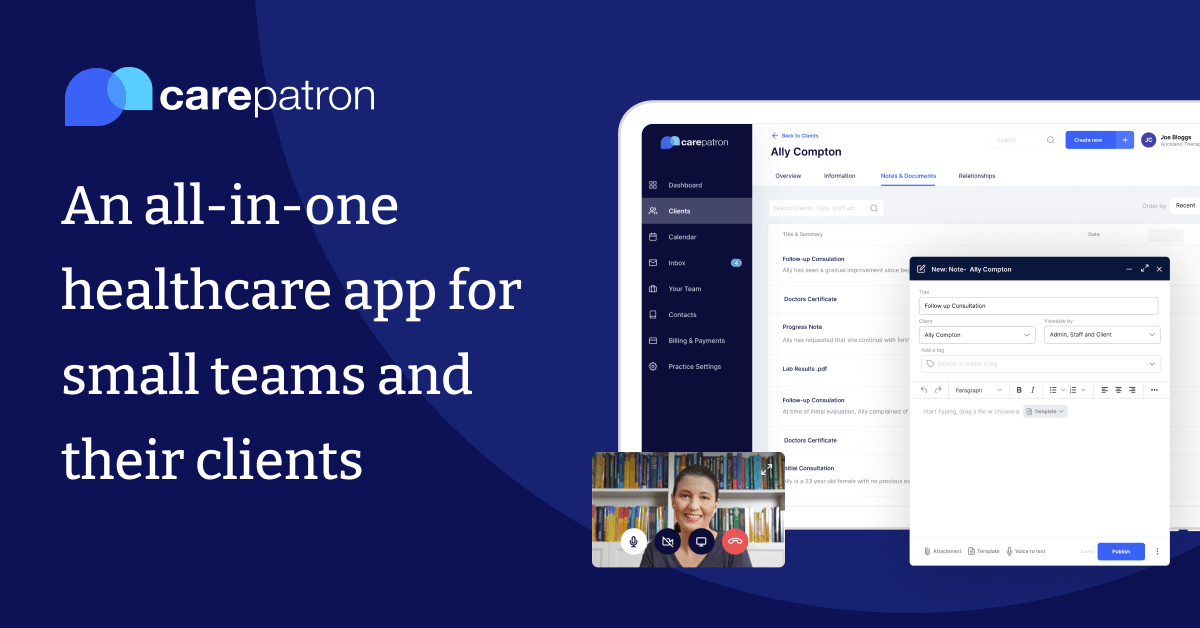
Clinical documentation is a broad component of all healthcare businesses and is essential to the smooth operations of a clinic, as well as it being vital to the patient healthcare experience. Composing, maintaining, and organizing clinical documents are all non-negotiable aspects to healthcare businesses, and being able to effectively incorporate medical record management will help drive your business to success. Patient data should be secure, up-to-date, and easily accessible, with healthcare platforms, such as Carepatron, efficiently supporting such requirements. With online software, you can compose clinical documents with the aid of templates and resources, and store them securely in HIPAA-certified encrypted servers. It’s a win-win for all involved, and will greatly elevate the quality of your service, so get behind it!
Further reading:


.jpg)