


Termination – a crucial aspect of psychotherapy
Termination is, perhaps, unfortunately, a key skill that therapists at a counseling practice need to master if they want to operate successfully. The termination may come at the end of a long and trusting relationship with a client, or it may result from something more complicated, including numerous no-shows or simply being a bad fit. Whilst clients are able to terminate their relationship with a therapist at any point and for any (or no) reason, this process is slightly more complex for therapists. Knowing the right time to terminate therapy, and how to navigate communications well will protect both the client and the therapist and ensure no ethical boundaries are breached. In this guide, we’re going to explain how termination ethics work and outline exactly how and why you should terminate therapy with a client. These skills will enable you to look after both you and your client’s health, hopefully contributing to the development of positive, trusting relationships.
Ethics around termination
Just like in every other aspect of therapy, termination has ethical considerations that you need to be aware of. Ethically, it is the counselor’s responsibility to prepare their clients for the termination process, and also to decide when their clients are no longer benefiting from the therapy. This means that counselors should be thinking about termination even from the very first session. Regardless of the relationship between counselor and client, it is often likely that the period of termination is accompanied by feelings of disappointment, loss, and finality. In order for the client to be as well prepared for this as possible, it is necessary that the termination is transparent and the therapist actively counsels them through the next stages. Termination can be highly triggering for certain clients, particularly those who have experienced trauma or loss, so the exact termination methods used by a counselor will vary for each individual case. Ultimately, an ethical termination is one that is honest, considerate, and based on the reasonable understanding that a client is not benefiting from therapy. If a therapist makes this decision early on in the relationship, they should maintain professionalism by referring the client to a more suitable option.
Ideal time to send a therapist termination letter to your client
The termination process will differ depending on the clients, but it is often a good idea to officially signify the end of a therapy relationship with a termination letter. This may seem excessively formal, but terminations can sometimes go wrong, and these letters will help protect the therapist. Whilst some therapists will choose to send a termination letter to every client, this may not seem like the best option for you. Nevertheless, there are certain situations in which you definitely should use termination letters, including:
- When you are terminating a client who hasn’t shown up to their appointment and isn’t rescheduling.
- When you are terminating a client based on a fear for your own safety or health, and so you do not wish to have an in-person appointment.
- When you are terminating a client because you believe you are a “bad” fit and won’t be able to address their needs adequately.
- When you are terminating a client who has had past issues handling rejection.
Process of laying the groundwork for termination
It is important that termination has been introduced to the client carefully, and you don’t just surprise them with this massive decision that they feel they have been left out of.
Prepare clients for termination from the start
When you first meet a client, part of your counseling treatment plan should involve explaining that therapy is time-limited. Successful therapy relationships always have an endpoint, and if clients are aware of this they will be better prepared to deal with termination. This also introduces the understanding that the termination of therapy is a good thing: it means the client can no longer benefit from the therapist and has most likely achieved their goals.
Set therapeutic goals to mark a “finish line” for therapy
Every therapist should create objective goals with their client that help focus the counseling guide. When each of these goals is achieved, it is important to acknowledge this, so the client can visualize and celebrate their own improvement. Whilst these goals will inevitably change as the client continues to develop and grow, they can help serve as a guideline with a final overall objective.
Therapy terminating process
When the end date for therapy is in sight, the majority of each session will essentially focus on termination. In order for this process to occur as effectively as possible, we have outlined the different considerations you need to be aware of.
Gauge readiness for termination
If a client has achieved the goals laid out in their treatment plan, it is time to think about termination. When this becomes clear, you should raise the possibility of termination with your client and assess whether they feel positive or negative about stopping therapy. Different factors will contribute to these emotions, and if your client is feeling particularly negative or fearful, it may be a good idea to adopt a fading-out approach, and slowly reduce your therapy sessions. If the termination is a result of a poor fit or interpersonal issues, you should talk to your client about a referral. To ensure transparency, this conversation is honest, upfront, and includes details about relevant pricing updates.
Review gains made in treatment
During termination, it is important to identify and acknowledge the achievements that a client has made within therapy. You should ask them to review their own advancements and compare their progress from the first few sessions to the last few sessions. Reviewing gains made in treatment will allow clients to actually visualize their own progress and accept that they are ready to stop therapy.
Create a mental health maintenance plan
The biggest issue surrounding termination is a fear of relapse. In order to combat this, you and your client should construct a mental health maintenance plan that outlines different methods and strategies the client can use. This documentation could be included in an online counseling guide, so it is accessible to clients even after termination.
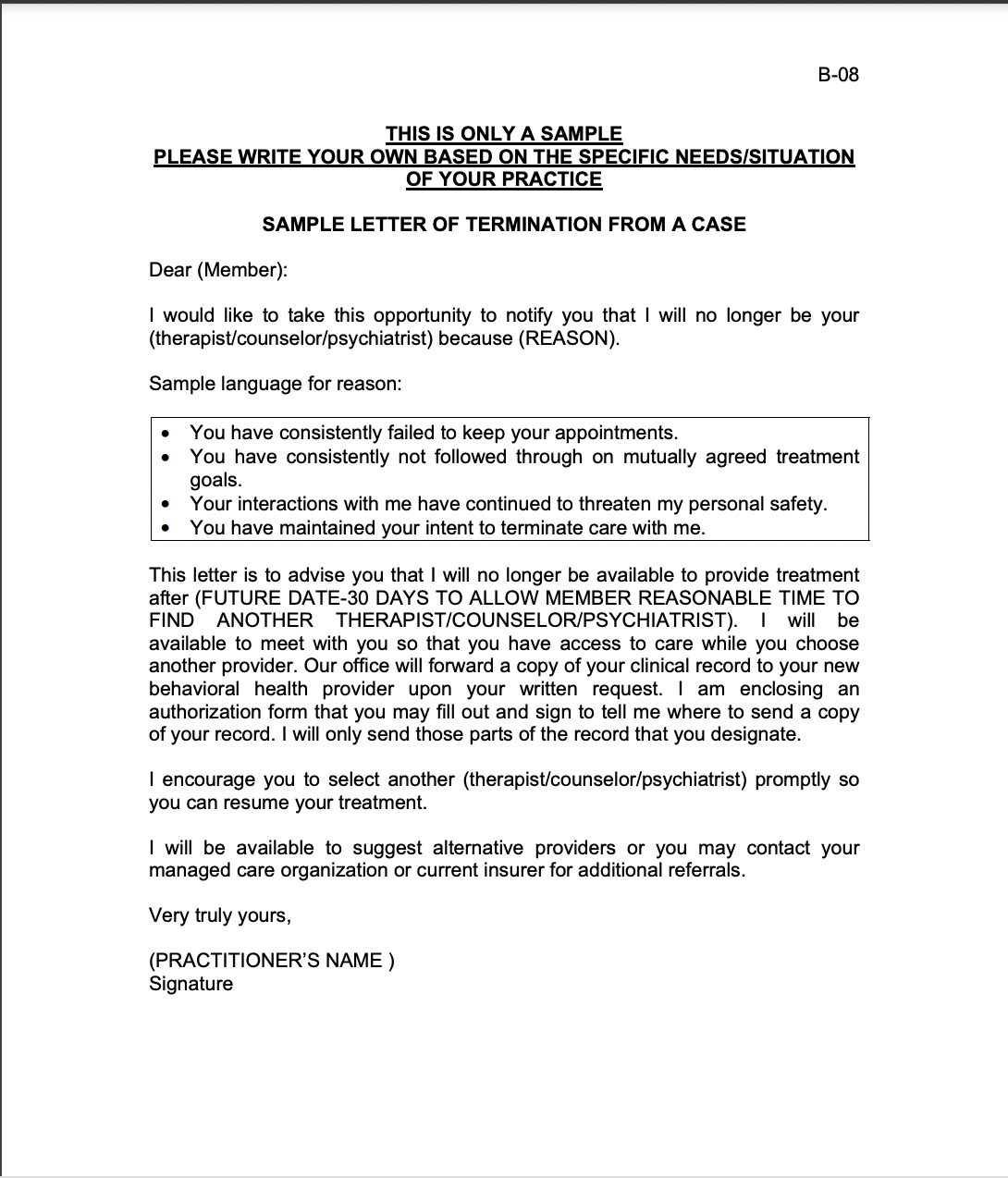
Mental health counseling termination letter sample
PDF version: https://content.highmarkprc.com/Files/EducationManuals/QualityMgmtToolkit/sample-termination-letter.pdf
Final thoughts
Learning how to navigate client terminations can be tricky for counselors, but it is a necessary skill. There are a number of different reasons why you may deem termination necessary, and it is essential that you be as transparent through this decision-making process as possible. Provided you follow ethical guidelines and are honest and upfront with your clients, there is no reason why you wouldn’t be able to conduct a smooth and seamless termination process. Hopefully, this article has provided you with enough information that you can focus on improving your termination skills and getting positive reviews from both your past and present patients!
Try Carepatron today and improve your counseling practice!
.png)
Further Reading:


.jpg)