


Progress notes are something that all practitioners need to do daily… There are a few reasons for this. The first being that progress notes are legal documents that provide a paper trail of a client's care history for insurance and other lawful purposes. Secondly, progress notes offer a means of communication between health professionals. And last but maybe the most important, progress notes also act as a contract between the client and their mental health clinician to ensure the treatment plan is followed.
Having a progress note template on hand can make the process of authoring one a lot more efficient…
Click here to see one that suits you.
You're welcome ☺️☺️☺️
Why are interventions often necessary in mental health practices?
Mental health, just like physical health and addiction services, can be affected by illness; often, people who experience illness need help to overcome or manage what they are going through.
In mental health practices, the help clients need is often provided in the form of interventions. The intervention usually involves the client and the therapist working together to set goals and strategies for achieving them using thoughts, feelings, and behaviors. Interventions treat various problems, including depression and anxiety and more complex disorders such as psychosis. Medical progress notes allow the practitioner to document these interventions and keep track of the client's progress.
Common types of interventions
Psychotherapy
Psychotherapy, often referred to as talk therapy, is the most common intervention for mental health problems. By enabling the client to know they are in an empathetic and accepting atmosphere, the clinician can help the client identify the source of their situation and consider healthier alternatives for managing them.
Psychoeducation and emotional awareness provide insight that the client can alter their attitude and behavior to live and manage their thought processes. Psychotherapy is effective for a wide range of conditions and is used globally by practitioners.
Most mental health practitioners practice one of six types of psychotherapy:
Behavioral therapy - Behavioral therapy involves some interventions that are designed to help the person unlearn maladaptive behaviors while learning adaptive behaviors.
Cognitive therapy - Cognitive therapy helps people identify distortions in thinking and understand how these distortions lead to problems in their lives.
Interpersonal therapy: Interpersonal therapy was initially conceived as a brief psychologic treatment for depression and is designed to improve the quality of a depressed person's relationships.
Psychoanalysis - In psychoanalysis, much of the focus is on helping the person understand how past relationships repeat themselves in the present. Understanding how the past affects the present allows the person to develop new and more adaptive ways of functioning in relationships and work settings.
Psychodynamic psychotherapy - Like psychoanalysis, psychodynamic psychotherapy emphasizes identifying unconscious patterns in current thoughts, feelings, and behaviors.
Supportive psychotherapy - Supportive psychotherapy, which is most commonly used, relies on the empathetic and supportive relationship between the person and the therapist. It encourages the expression of feelings, and the therapist provides help with problem-solving.
Medications
Medications, prescribed usually by a GP or Psychiatrist, are often used to treat the symptoms of mental illness. Medications are often combined with psychotherapy and are offered in both inpatient and outpatient mental health settings.
Complementary Treatments
Complementary and alternative mental health treatment options are also used in traditional forms of treatment such as therapy and medication. Some of the most common complementary therapies include yoga, meditation, equine therapy, exercise, and diet.
Need some help with treatment plans?
Click here for a brief but comprehensive guide.
How to record interventions with your clients in progress notes effectively
When writing progress notes, you'll find your end product far more informative and concise if you use a format. As usual, there is no shortage of acronyms within the health sector to choose from (LOL🤪). The SOAP format is the most helpful and commonly used method for writing mental health progress notes. It is a simple and easy-to-use framework whereby you can create a therapy note that captures the most critical information concisely. But wait…
What does SOAP stand for again?
Subjective
The subjective section of the therapy notes is to gather qualitative information from the client and their point of view. Some examples of this data might include their perceived progress, things they feel they have achieved or made progress in, and places where they are struggling or need more support.
Objective
In this section of the SOAP notes, your role as a health care professional is to conduct some objective note-taking. In this section, you'll focus on providing the reader with a description of what occurred during the therapy session. Things you'll want to include here are; observations about your client's affect, attitude, and responses. If possible, it can also be an excellent idea to have a physical exam and vital signs.
Assessment
The assessment part of the SOAP note is where you'll want to synthesize the subjective and objective sections into one easily digestible section. Using your skills as a mental health professional, you'll also want to note down your clinical impression and professional opinion on the client's progress towards their treatment goals.
Plan
In the plan section of the progress notes, you'll want to note down things that will happen in the future. When do you plan to see the client again? What do they aim to do within that time? If a safety plan is required, what is it? Are there any new goals for this individual client? This is particularly important if your client is an outpatient, as having access to a plan and goals is incredibly helpful in making progress throughout the therapeutic process.
Intervention terminology for progress notes
In progress notes, what terminology should you be using? Sometimes descriptive clinical words to use in progress notes can be tricky to think of… so here's a list of some commonly used terms to help you reframe your notes to be more descriptive and strengths-based;
- Affirmed
- Challenged
- Clarified
- Collaborated
- De-escalated
- Demonstrated
- Directed
- Discussed
- Encouraged
- Examined
- Explored
- Evaluated
- Facilitated
- Focused on
- Guided
- Instructed
- Interpreted
- Inquired about
- Listened
- Paraphrased
- Planned
- Practiced
- Prompted
- Provided
- Redirected
- Reflected back
- Reframed
- Refocused
- Reinforced
- Reviewed
- Shared
- Supported
- Validated
Write Effortless Progress Notes with Carepatron
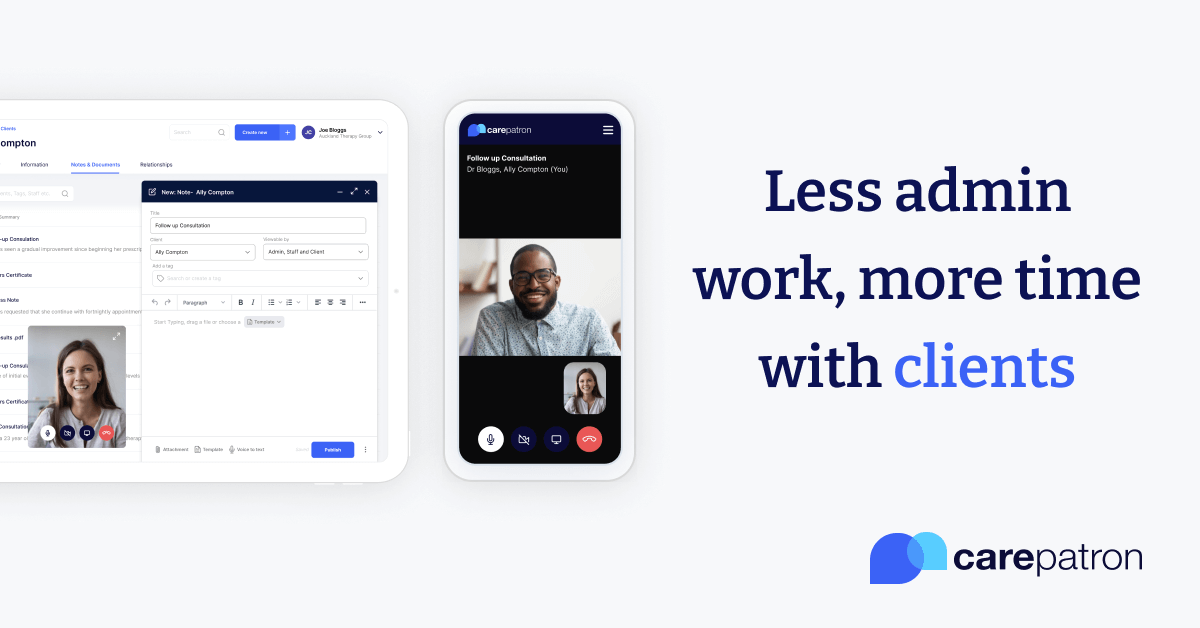
Trust us, practice management software is the way of tomorrow, and Carepatron is at the top of their game. Carepatron offers several different capabilities and therapy scheduling software such as a client portal, scheduling, AI voice transcription, and the ability to conduct telehealth sessions. Meaning you can work on one platform and don't have to switch between several different providers to work throughout your day.
Why are interventions often necessary in mental health practices?
Mental health, just like physical health and addiction services, can be affected by illness; often, people who experience illness need help to overcome or manage what they are going through.
In mental health practices, the help clients need is often provided in the form of interventions. The intervention usually involves the client and the therapist working together to set goals and strategies for achieving them using thoughts, feelings, and behaviors. Interventions treat various problems, including depression and anxiety and more complex disorders such as psychosis. Medical progress notes allow the practitioner to document these interventions and keep track of the client's progress.
.png)
Common types of interventions
Psychotherapy
Psychotherapy, often referred to as talk therapy, is the most common intervention for mental health problems. By enabling the client to know they are in an empathetic and accepting atmosphere, the clinician can help the client identify the source of their situation and consider healthier alternatives for managing them.
Psychoeducation and emotional awareness provide insight that the client can alter their attitude and behavior to live and manage their thought processes. Psychotherapy is effective for a wide range of conditions and is used globally by practitioners.
Most mental health practitioners practice one of six types of psychotherapy:
Behavioral therapy - Behavioral therapy involves some interventions that are designed to help the person unlearn maladaptive behaviors while learning adaptive behaviors.
Cognitive therapy - Cognitive therapy helps people identify distortions in thinking and understand how these distortions lead to problems in their lives.
Interpersonal therapy: Interpersonal therapy was initially conceived as a brief psychologic treatment for depression and is designed to improve the quality of a depressed person's relationships.
Psychoanalysis - In psychoanalysis, much of the focus is on helping the person understand how past relationships repeat themselves in the present. Understanding how the past affects the present allows the person to develop new and more adaptive ways of functioning in relationships and work settings.
Psychodynamic psychotherapy - Like psychoanalysis, psychodynamic psychotherapy emphasizes identifying unconscious patterns in current thoughts, feelings, and behaviors.
Supportive psychotherapy - Supportive psychotherapy, which is most commonly used, relies on the empathetic and supportive relationship between the person and the therapist. It encourages the expression of feelings, and the therapist provides help with problem-solving.
Medications
Medications, prescribed usually by a GP or Psychiatrist, are often used to treat the symptoms of mental illness. Medications are often combined with psychotherapy and are offered in both inpatient and outpatient mental health settings.
Complementary Treatments
Complementary and alternative mental health treatment options are also used in traditional forms of treatment such as therapy and medication. Some of the most common complementary therapies include yoga, meditation, equine therapy, exercise, and diet.
Need some help with treatment plans?
Click here for a brief but comprehensive guide.
How to record interventions with your clients in progress notes effectively
When writing progress notes, you'll find your end product far more informative and concise if you use a format. As usual, there is no shortage of acronyms within the health sector to choose from (LOL🤪). The SOAP format is the most helpful and commonly used method for writing mental health progress notes. It is a simple and easy-to-use framework whereby you can create a therapy note that captures the most critical information concisely. But wait…
What does SOAP stand for again?
Subjective
The subjective section of the therapy notes is to gather qualitative information from the client and their point of view. Some examples of this data might include their perceived progress, things they feel they have achieved or made progress in, and places where they are struggling or need more support.
Objective
In this section of the SOAP notes, your role as a health care professional is to conduct some objective note-taking. In this section, you'll focus on providing the reader with a description of what occurred during the therapy session. Things you'll want to include here are; observations about your client's affect, attitude, and responses. If possible, it can also be an excellent idea to have a physical exam and vital signs.
Assessment
The assessment part of the SOAP note is where you'll want to synthesize the subjective and objective sections into one easily digestible section. Using your skills as a mental health professional, you'll also want to note down your clinical impression and professional opinion on the client's progress towards their treatment goals.
Plan
In the plan section of the progress notes, you'll want to note down things that will happen in the future. When do you plan to see the client again? What do they aim to do within that time? If a safety plan is required, what is it? Are there any new goals for this individual client? This is particularly important if your client is an outpatient, as having access to a plan and goals is incredibly helpful in making progress throughout the therapeutic process.
Intervention terminology for progress notes
In progress notes, what terminology should you be using? Sometimes descriptive clinical words to use in progress notes can be tricky to think of… so here's a list of some commonly used terms to help you reframe your notes to be more descriptive and strengths-based;
- Affirmed
- Challenged
- Clarified
- Collaborated
- De-escalated
- Demonstrated
- Directed
- Discussed
- Encouraged
- Examined
- Explored
- Evaluated
- Facilitated
- Focused on
- Guided
- Instructed
- Interpreted
- Inquired about
- Listened
- Paraphrased
- Planned
- Practiced
- Prompted
- Provided
- Redirected
- Reflected back
- Reframed
- Refocused
- Reinforced
- Reviewed
- Shared
- Supported
- Validated
Write Effortless Progress Notes with Carepatron
Trust us, practice management software is the way of tomorrow, and Carepatron is at the top of their game. Carepatron offers several different capabilities and therapy scheduling software such as a client portal, scheduling, AI voice transcription, and the ability to conduct telehealth sessions. Meaning you can work on one platform and don't have to switch between several different providers to work throughout your day.


.jpg)