


Have healthcare practices and patient care changed in this digital era?
With the rapid development of technology, it’s no surprise that the healthcare industry has been transitioning towards digitalization and moving business processes online. A recent study highlighted this, with 84% of US healthcare organizations shifting towards using patient portal technology to provide care for patients.
Making the switch to patient engagement technologies means that healthcare organizations can elevate the quality of patient care, improve clinical outcomes and allow staff to focus on urgent care. Organizations that transition towards using technology to deliver their services reap huge benefits on the basis of having an interoperable system that can be accessed from anywhere. Online technology allows patients to schedule and book appointments themselves, and practitioners can streamline their medical billing and coding, and clinical documentation processes.
The software is HIPAA-compliant, allowing healthcare businesses to handle private information safely and securely. The introduction of patient portals means that healthcare businesses are more personal and efficient than ever.
How are healthcare professionals leveraging technology to deliver better patient care?
Patient portals are becoming more and more commonplace for healthcare businesses, and are used to greatly boost the quality of their healthcare services. To ensure the patient gateway to the highest quality of treatment, eight technologies are significant for practices to consider:
- Telehealth - As an online healthcare delivery method, telehealth is an emerging area of health that is becoming very popular. It enables practitioners to be able to communicate with patients virtually, through video conferencing and calling, as well as messaging. This means patients can receive treatment from the comfort and safety of their homes, and it doesn’t require any in-person components while offering the same benefits. Nice!
- Patient monitoring - Monitoring vulnerable patients from their homes remotely allows for the extraction of valuable data. For example, patient blood glucose levels, sleep patterns, and fitness can be tracked and easily transmitted to practitioners to be factored into treatment.
- Communication - For remote healthcare work, many businesses are using collaboration platforms, such as Microsoft Teams and Slack, to communicate with various professional colleagues. Using these types of software allows for practitioners to chat and meet over video, as well as store files, increasing communication and productivity.
- Cloud computing - Using on-demand services over the internet can prove immensely beneficial for businesses, as you don’t need to be physically near a computer for them to work. They are automated systems that are cost-efficient and can allow for greater engagement with patients and sharing of health data.
- Short Message Service (SMS) - Essentially, this is a text messaging service that is incredibly useful for businesses who need to remind patients about upcoming appointments. Because they’re automatic, they’re a great time-saver that eliminates the need for calling and leaving voicemails. They can be used for almost any notification you want to send your patients!
- Telephony - Using voice over Internet protocol (VoIP) services means that practitioners can send and receive phone calls through the internet, which is much more convenient than traditional hardwire landlines. This immensely boosts business communications and allows for improved satisfaction and reduced cancellations.
- Kiosks - Self-service kiosks, such as check-in and payments, can increase engagement and efficiency within healthcare clinics. They also reduce the spread of illnesses and diseases, which is vital within the current Covid climate.
Is technology benefiting medical professionals or replacing them?
A common concern that creeps up when we hear about technology is that it has made many jobs redundant. The artificial intelligence systems in place mean that technology is evolving at an incredibly rapid pace, and as a result, there are some definite pros and cons in response to its evolution. But don’t worry, the robots aren’t taking over! All technology is made by humans, and we are prone to mistakes, meaning there are elements in the medical realm that cannot be replaced.
Technology does mean that some tasks that are typically performed by humans are being replaced, such as using chatbots to provide mental health support to clients, as well as various administrative tasks. For instance, electronic health records are now encrypted and stored online to allow for ease of access, and artificial intelligence systems can also identify issues with data and patient information.
However, the patient care technologies in place rely on data quality that requires subjective judgment from humans, meaning some roles can never be replaced electronically. For example, diagnosing patients, and providing therapy on an extensive scale requires human skills and intelligence that is specific on a case-by-case basis. Many patients need human interaction, empathy, and a practitioner relationship to be accurately treated.
Trends of digital transformation in healthcare
There’s no denying that technology capabilities are tremendous, and are so vital for how we operate as businesses. And when it comes to healthcare, you also can’t deny a noticeable shift towards letting go of outdated practices and moving towards emerging technologies within this digital era. There is a clear transformation occurring, especially when it comes to patient care technology. As a result, we have collated some current popular trends that you should take advantage of:
- On-demand healthcare - Over 50% of web browsing takes place on mobile devices, with this number only increasing. In terms of healthcare, this is no different, with 77% going online to book appointments, and almost 50% doing so to research doctors and facilities. It’s no secret patients like convenience and immediate access to services - so having healthcare that can be accessed within a couple of touches of a button is immensely beneficial.
- Data, but make it big - Big data involves aggregated data concerning all areas of business processes, that can be used to identify patterns and trends to improve your practice. Harnessing data in the right way can reduce the risk of medication and diagnosis errors, as well as foster preventive care, and allow for more accurate staffing. Finances can also be spent wisely, with money going directly where it needs to.
- Virtual reality treatment - Perhaps one of the most surprising on this list, patients can now be treated via virtual reality. Often associated with video games, virtual reality is a headset device that can place users in any imagined scenario. This makes the simulations perfect for treating anxiety or post-traumatic stress disorders, with their high engagement levels. Crazy, right?
- Wearable devices - Because of their easy use, wearable devices are becoming more and more common to collect healthcare data. Such devices include heart rate sensors, exercise trackers, and sweat meters. They’re great as they enable a great healthcare experience, provide insurance incentives and gamification opportunities.
- Patient portal - Having patient portals is one of the rapidly growing trends amongst healthcare businesses, as it elevates the quality of the workplace by allowing for an integrated workflow. Practitioners and patients can connect online, and efficiently manage appointments, clinical documents, and online payments.
- Artificial intelligence (AI) - AI technology is exponentially growing, and its uses are perfect for the healthcare industry. AI can be used in chatbot and virtual health assistant services, as well as for precision medicine such as medical imaging. It’s even useful for some surgeries!
- Blockchain - If cryptocurrency and Elon Musk scares you, don’t worry - blockchain isn’t as overwhelming as it sounds. Blockchain technologies can effectively prevent data breaches, cut business costs, manage electronic health records, and allow for safety in networking across computers.
- Predictive healthcare - It takes no genius to realize no one likes any nasty surprises, and in healthcare, there can be quite a few of them. Making sure your systems are based on data analysis will highlight improvements that will make a difference in your work.
Conclusion
Technology is one of the world’s greatest gifts, and it would be a great disservice to your practice if you were to miss out on what it has to offer. With the right patient care technology, you can boost the quality of your healthcare practice, and deliver better solutions to you and your patients. It’s a win-win for all involved.
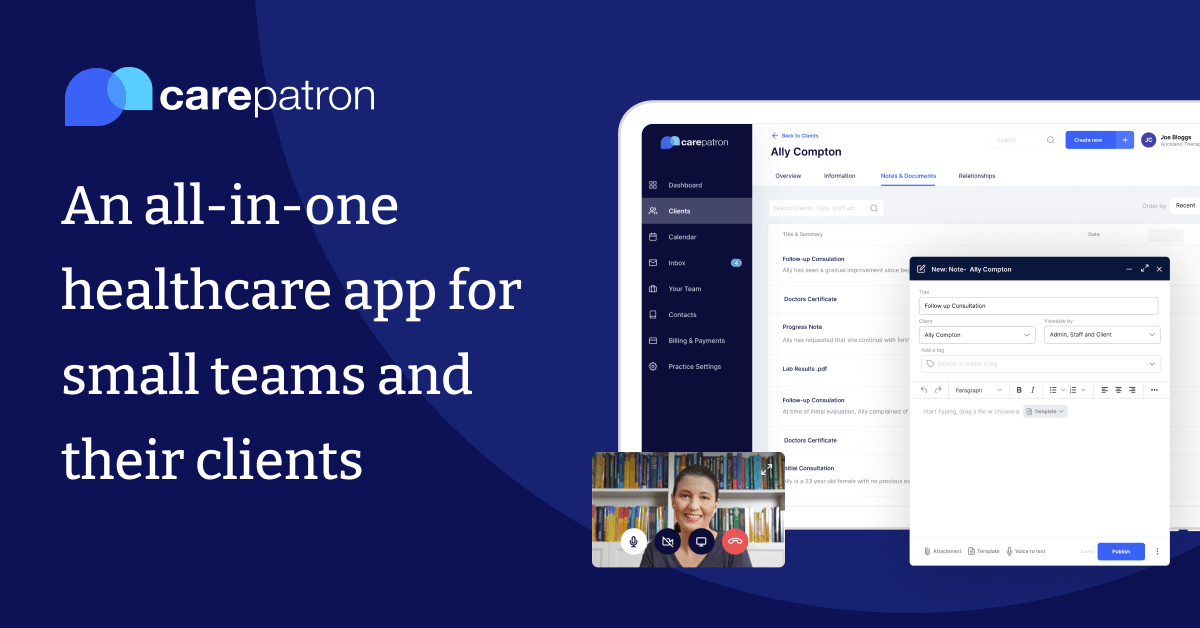
Many businesses, including Carepatron, offer technological health solutions to you, free of use, that will increase efficiency across all processes. From just one place, you can access a variety of features based on data analysis that have been designed with your needs in mind. Technology doesn’t have to be complicated, and with the right software, you’ll see exponential growth in no time.
Further reading:


.jpg)