


Overview on Electronic Health Records (EHR) in healthcare
Electronic Health Records have become an intrinsic aspect of the healthcare industry. Essentially, they refer to the digitized copies of patient records that are stored online, where they can be accessed and shared across authorized users. With the surge in using EHR software by healthcare businesses, there are certain considerations that practitioners need to make, including understanding healthcare insurance terminologies and insurance telehealth coverage. When it comes time to finding the right EHR system for your practice, there are different things you need to keep an eye out for. In this guide, we’re going to outline some of these different components, equipping you with the knowledge to find and implement the perfect EHR system, improving organization and efficiency at your business.
Benefits of maintaining EHR for a medical practice
There are a significant number of benefits that are associated with maintaining EHR in medical practices. Regardless of the size of your business or the specific field of healthcare that you work in, implementing EHR is guaranteed to lead to certain advantages, including:
Reporting: EHR stores all of a healthcare practice’s data, where it can be accessed in real-time by authorized users. This collection of data allows for improved reporting across systems, in turn leading to better clinical and administrative decisions. The technology is also capable of generating reports that can highlight areas that are working successfully or perhaps require improvement.
Communication: Because EHRs update in real-time, all relevant information is available to practitioners at all times. This means that different departments and facilities can communicate more effectively, which has the additional benefit of improving clinical outcomes for patients.
Accurate data: Creating documentation is an inherent part of working in the healthcare industry that is highly time-consuming and tedious, which sometimes contributes to errors in recorded data. With EHR, data has been proven to be significantly more accurate, leading to reduced billing errors (and thus, better reimbursement rates) and informed clinical decisions.
Research: As we mentioned, EHR technology is capable of generating data-driven reports that inform practice’s awareness of how their processes are working. This type of reporting provides information that can guide research being conducted in the healthcare industry, paving the way to better and more informed methods of care.
Evaluation checklist for a EHR platform
When it’s time to decide what EHR platform will best suit your business, there are certain features that you should look out for. These include:
Customer service provided
Implementing new technology within your healthcare practice is a daunting prospect, particularly if you have staff that isn’t entirely comfortable with navigating different systems. This is why it is extremely important that the EHR platform you decide on has customer service that can help you overcome any struggles or barriers you may come up against.
Functionality
Functionality refers to the specific features that are integrated into the EHR. These may include charting, scheduling, patient portals, documentation, and billing features. The functionality of an EHR platform is what will facilitate the growth and organization of your business and allow it to improve its operations.
Integrations with other systems
Healthcare businesses can’t operate with just an EHR. They also need practice management software, billing assistance, and online scheduling features, all of which need to be integrated with the EHR.
Pricing
Unsurprisingly, pricing has a lot to do with finding any new system for your business. Whilst EHR is essential for the management of your practice, it is also important that any purchase fits within your budget. Fortunately, there are many different platforms to choose from that are available at differing pricing points, allowing you to find the best fit.
Interoperability
It is likely that your business already has certain systems in place, which is why it is so important for the EHR platform you select to be interoperable. This will guarantee a seamless implementation process and ensure your data can be transferred between systems.
Appointment scheduling and reminder capabilities
The best EHR platforms are also integrated with features like appointment scheduling and automated reminders. These allow your business to streamline administrative processes, generate efficient schedules, create appointment checklists for patients, and significantly reduce no-shows.
Compliance with healthcare regulatories
All EHR platforms need to uphold HIPAA regulations so that your business can ensure compliance. This means high-quality encryption, security measures, and authorization controls. Before you decide on an EHR for your business, you should ensure they fulfill the requirements of a HIPAA compliance checklist for medical practices.
Patient care and self-management
As the healthcare industry moves to a model of value-based care, patient care and self-management have never been more important. With the right EHR system, improving patient involvement can be facilitated through increased access to medical records, which results in better transparency.
Clinical documentation
Documentation is one of the most important aspects of working as a healthcare practitioner that can be streamlined with EHR. EHR systems are often integrated with clinical note templates, transcription software, and other tools designed to simplify the process of creating documentation.
Steps in an EHR implementation lifecycle
Now that you know what you should look out for in an EHR platform, it’s time to review the implementation process.
Determine your need for a good EHR system
First thing’s first, you need to evaluate your practice’s need for an EHR system and the steps you need to take in preparation. This includes understanding your IT infrastructure, staff readiness, budget limits, and proposed timeline for implementation.
Present and future workflow analysis
Just like any new changes within a business, implementing EHR requires a lot of planning. You should analyze the present workflow of your practice, and plan for future changes in order to have a successful transition process.
Create a roadmap for implementation
Once you have completed initial planning, it’s time to create a roadmap. This means identifying the different tasks that need to be finished prior to implementation in a well-presented format and easy-to-follow format.
Choose the best-suited EHR platform
Next, it’s time to find your EHR platform! You should spend quite a long amount of time on this task, and conduct lots of research. Talk to colleagues and other healthcare businesses to determine what EHR platforms work best for them, and don’t be afraid to try a few free trial runs to find the perfect fit.
Develop a training program for staff
After you have decided what EHR platform is the best for your healthcare business, you need to develop a training program for staff. There is a high likelihood that some staff will be uncomfortable with using a new system, so it’s extremely important that all clinical and administrative staff take part in a training program.
Constantly improvize after implementation
Even after implementation, the transition process isn’t over. You need to ask for regular feedback from both patients and clinicians, keep running training programs, and evaluate your KPIs and relevant growth.
Take home message
Implementing EHR systems is one of the best methods to improve the finances of your telehealth practice. They work to improve efficiency, organization, and communication within healthcare businesses, whilst simultaneously boosting clinical outcomes. When it comes time to create a budget for your private practice, it is incredibly important that you take into consideration technological purchases, including EHR software and other systems. Hopefully, this guide has equipped you with enough knowledge that you feel confident to go out there, do some research, and find the best EHR system for your business.
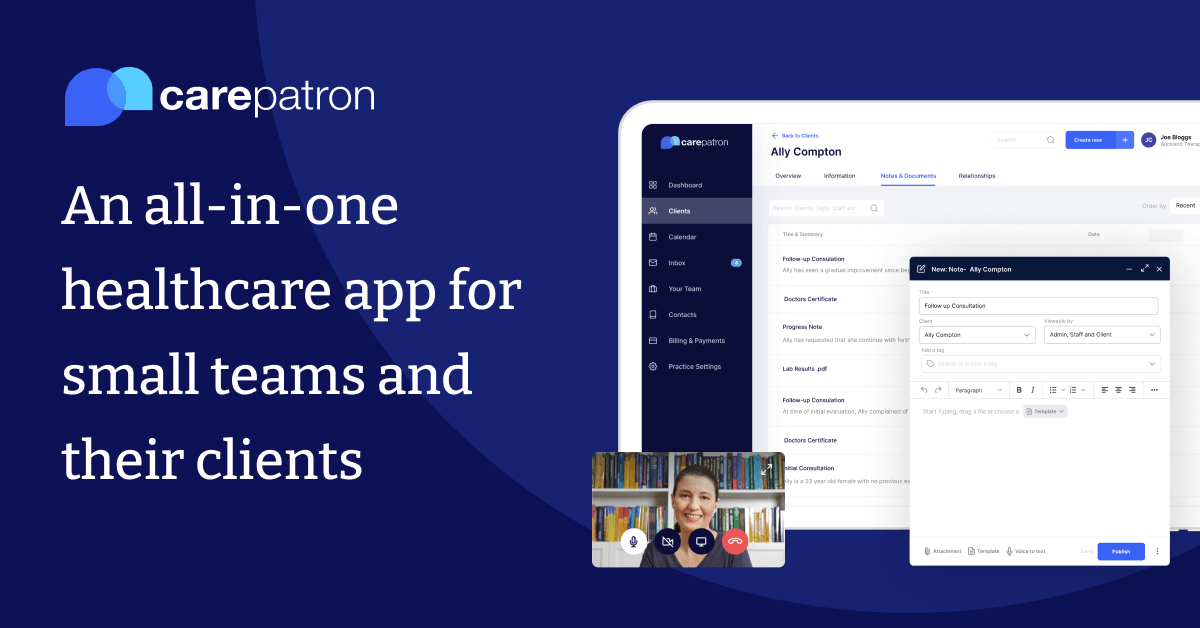
One EHR system to replace them all: Try Carepatron for free today
Further Reading:
- Security Techniques for the Electronic Health Records
- EHR implementation checklist


.jpg)